ADHD Task Paralysis: How to Beat Decision Fatigue and Start the Right Task
You sit down to work. The list is not even that unclear. You know the big things that matter. Reply to the client. Finish the proposal. Clean up the overdue admin. Start the workout plan. Then nothing happens.
You check one message. You reopen your task app. You reorganize the list. You think maybe you should start with the quick win. Then maybe the high-impact task. Then maybe the task that has been sitting there for six days because avoiding it is starting to cost you more energy than doing it. Twenty minutes later, you still have not started.
That experience has a name: ADHD task paralysis. It is one of the most common ways decision fatigue shows up in real life.
Task paralysis is not laziness. It is not a character flaw. It is what happens when the brain hits too much choice, too much ambiguity, or too much emotional weight right at the moment action should begin. The result is strange if you are watching from the outside. You can be busy, stressed, and fully aware of what matters, yet still unable to begin.
This is also why a lot of productivity advice misses the point. It keeps telling people to be more disciplined when the real issue is that the system still asks the brain to make too many decisions before momentum starts.
In this guide, we’ll break down why task paralysis happens, what makes it worse for ADHD brains, and what actually helps. We’ll also show what a productivity app has to do if it genuinely wants to reduce decision fatigue instead of dressing it up with prettier boxes.
What ADHD Task Paralysis Actually Is
ADHD task paralysis is the freeze that happens when you want to act but cannot get over the starting threshold.
That threshold can break for a few different reasons:
- Too many possible starting points
- A task that feels bigger than your current energy
- No obvious first step
- Fear of doing the wrong thing first
- A brain that craves immediate payoff while the task offers delayed reward
People often describe this as feeling “stuck,” but stuck is only the surface symptom. Underneath, the brain is trying to solve several problems at once: priority, effort, uncertainty, timing, and reward.
Here is the simplest way to think about it:
| What you feel | What is usually happening |
|---|---|
| ”I don’t know where to start” | The choice set is too wide |
| ”Everything feels important” | Your brain has no clean ranking signal |
| ”I know the task but still can’t begin” | The first step is too vague or emotionally loaded |
| ”I keep picking small stuff instead” | Your brain is chasing lower-friction rewards |
| ”I opened Instagram before I even noticed” | You lost the decision battle before action began |
That last point matters. When the start feels hard, the brain does not stay neutral. It goes hunting for relief. Usually that means distraction, novelty, or a tiny admin task that gives closure faster than the real work.
Why ADHD Brains Get Hit Harder by Decision Fatigue
Everyone experiences decision fatigue. ADHD just makes the tax show up earlier and more often.
A non-ADHD brain can often tolerate a messy list for longer before freezing. An ADHD brain is usually more sensitive to friction at the start of a task, more reliant on visible reward, and more vulnerable to switching toward whatever feels easier right now.
That is why generic productivity systems often fail. They assume the problem is storage. Put everything in one inbox. Tag it nicely. Review it weekly. Re-rank it every morning. In theory, that sounds organized. In practice, it means your brain meets a fresh set of decisions every single day.
If your system asks you to sort, compare, estimate, and self-motivate before you do a single minute of work, it is not reducing cognitive load. It is adding to it.
A better system answers three questions fast:
- What matters now?
- What is the smallest real start?
- How do I begin before my attention escapes?
That is the whole game.
Why Standard To-Do Lists Often Make Task Paralysis Worse
A long to-do list looks productive. It can also become a machine for generating guilt.
Most lists fail in four predictable ways.
1. They present ten choices when you need one
A list is useful for storage. It is not automatically useful for action. If you are staring at 24 tasks at 9:10 a.m., the app has done the filing part but not the execution part.
2. They treat all tasks as equally startable
“Prepare investor update” and “send accountant receipt” do not ask the same thing from your nervous system. One is emotionally loaded and open-ended. The other is narrow and finite. If the app displays both with the same visual weight, your brain still has to do the interpretation work.
3. They do not reduce ambiguity
A big task without a first action still feels like fog. “Fix onboarding” is not a starting point. “Review the first three screens and rewrite the headline” is a starting point.
4. They offer weak reward at the exact moment reward matters most
For many ADHD users, a plain checkbox is not enough. The task may be important, but importance is delayed. Distraction is immediate. If the system does not create some kind of immediate payoff, low-value novelty wins.
This is exactly why BeeDone keeps pushing toward decision-support features instead of just more organization. As of July 2026, the app combines tasks, habits, routines, Deep Work tools, AI coaching, and a doomscroll blocker in one flow because the real problem is rarely just remembering what exists. It is getting across the starting line before attention leaks away.
What Actually Helps When You Freeze
The fix is not “try harder.” The fix is to shrink the number of decisions between intention and action.
1. Reduce the visible choice set
If you feel paralyzed, do not ask yourself to choose from your entire life.
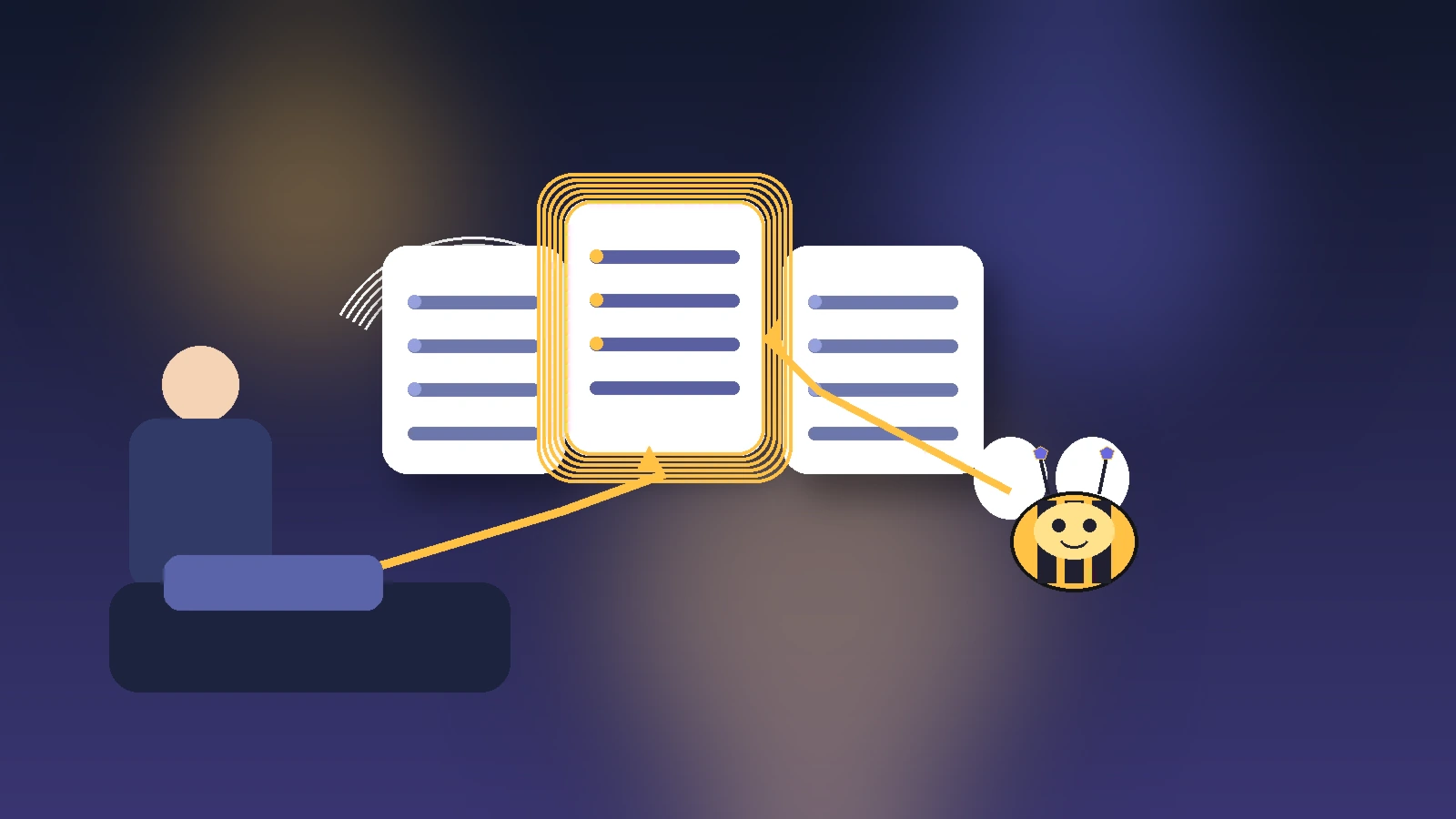
Give yourself a short execution menu. Three to five options is plenty. The goal is not perfect prioritization. The goal is to remove open-field wandering.
This is why daily planning works better than master-list staring. Your full backlog can exist in the background, but your action layer should stay tight.
A useful rule: if the list on screen looks like a grocery receipt, it is already too big for a frozen brain.
2. Turn vague work into the first physical move
The brain hates shapeless starts. It responds far better to concrete movement.
Compare these:
- Write newsletter
- Draft the opening paragraph for the newsletter
- Plan taxes
- Open the tax folder and list the missing documents
- Clean apartment
- Put dishes in the sink and start a 10-minute reset timer
The smaller version is not “cheating.” It is how you create traction.
BeeDone’s AI task-splitting and planning flow matter here because they translate intimidating work into a smaller executable step. The point is not to break every project into 50 sub-tasks. The point is to make starting less expensive.
3. Remove the need to pick perfectly
A lot of task paralysis is not confusion. It is fear of choosing wrong.
Should you start with the hardest task? The fastest task? The most overdue one? The one with the highest emotional drag? If you force yourself to solve that optimization puzzle every morning, you burn energy before work begins.
Sometimes the best move is to let the system pick from a constrained shortlist.
That is why BeeDone has been leaning harder into task roulette and, in recent product updates, a more unified task-and-habit selection flow. The user benefit is simple: when you are stuck between several acceptable next moves, you stop negotiating with yourself and start moving. Not every work session needs a grand strategic choice. Sometimes it needs a clean nudge.
This sounds small, but it is not. For ADHD users, removing one moment of hesitation can be the difference between 90 minutes of deep work and 90 minutes of mental idling.
4. Add immediate reward to the start, not only the finish
Motivation does not always arrive first. Often, momentum comes first and motivation follows.
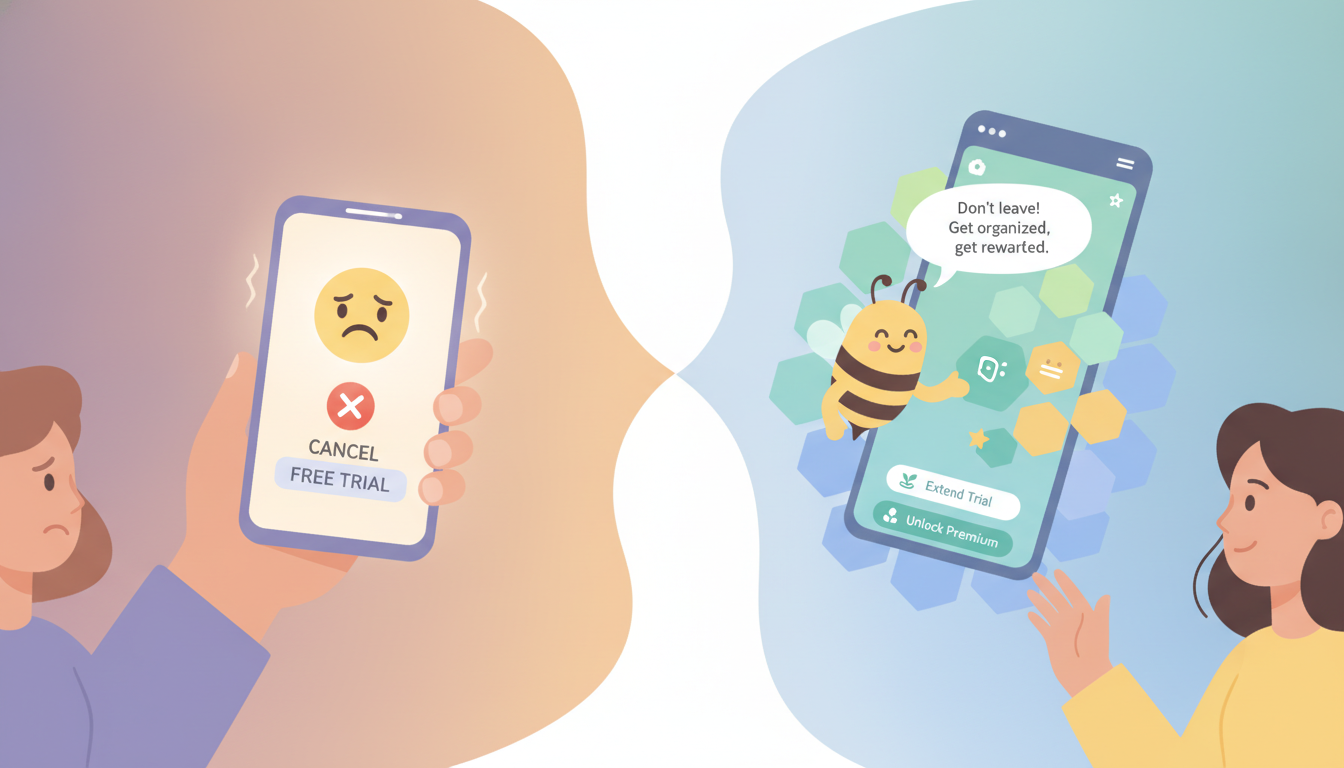
That is easier when the system makes starting feel rewarding. XP, streaks, visible progress, satisfying feedback, and coach responses are not childish gimmicks if they help the brain stay in the lane long enough to build momentum.
Recent BeeDone work has doubled down on that reward loop with more deliberate dopamine cues, including richer feedback around action and progress. That matters because the brain registers progress faster when the signal is immediate and obvious.
A plain checkbox asks you to believe the future reward will be enough. A better system gives you a reason to keep going right now.
5. Protect the first five minutes from distraction
The most fragile part of any task is the beginning.
If your phone is still offering an easier reward one swipe away, decision fatigue usually ends with the wrong decision. This is where environment beats willpower.
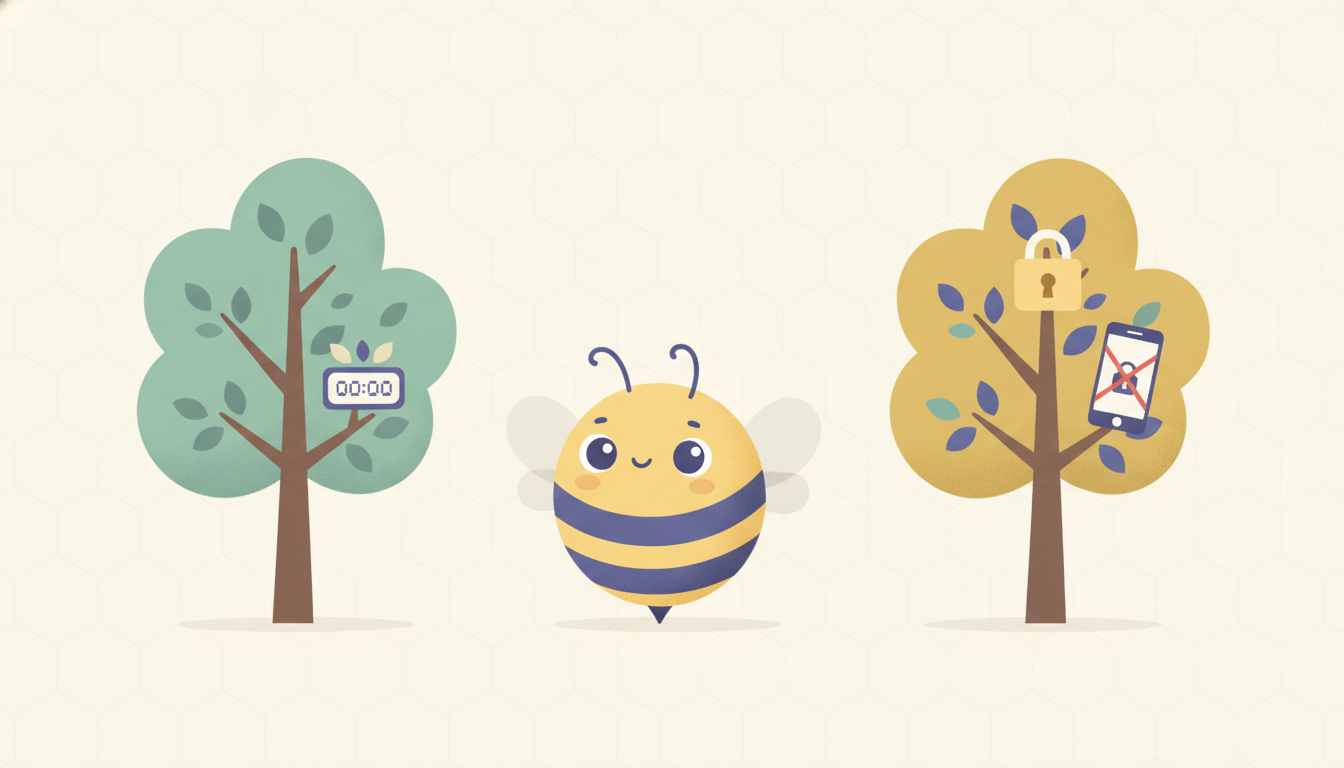
A strong productivity setup blocks the escape hatch or at least makes it harder to take. BeeDone’s Doomscroll Blocker is built around that reality: earn your way into distraction instead of defaulting into it. That approach works especially well for people whose avoidance pattern is not total collapse, but small repeated escapes.
A Practical Framework for Beating Task Paralysis
If you want a repeatable playbook, use this one:
| Step | What to do | Why it works |
|---|---|---|
| 1. Shrink | Cut today’s visible list down to 3-5 real options | Less choice, less freeze |
| 2. Clarify | Rewrite the chosen task as the first physical move | Lowers activation energy |
| 3. Commit | Start a timer or Deep Work block immediately | Prevents more internal debate |
| 4. Protect | Remove phone distractions for the opening stretch | Stops attention leakage |
| 5. Reward | Track visible progress right away | Teaches the brain that starting pays off |
Notice what is missing from this framework: long motivation speeches.
The reason is blunt. Task paralysis usually breaks at the level of friction, not inspiration.
What to Look for in an ADHD Productivity App
If you are choosing a tool to help with task paralysis, look for these five things:
A narrow daily execution view
You should not have to reprocess your whole backlog every time you open the app.
Real first-step support
The app should help turn “do project” into an action you can actually begin.
Decision support
Sorting, prioritization, or random selection from a smart shortlist all beat a static giant list.
Immediate feedback
Visible progress, rewards, and encouraging cues matter more than productivity purists like to admit.
Distraction control
The right app should support focus, not simply document your intentions before you go lose 40 minutes elsewhere.
BeeDone is strongest when a user needs all five in one place. That is why the product combines AI planning, habits, routines, Deep Work, and gamified reward loops rather than treating them as separate categories. If your real bottleneck is execution, fragmentation is expensive.
For a broader ADHD angle, read The Best ADHD Task Management App in 2026. For the habit side, How Gamification Makes Habits Stick explains why visible reward changes follow-through.
The Core Idea to Remember
Here is the sentence worth keeping:
ADHD task paralysis is usually not a motivation problem. It is a design problem at the moment of choice.
If the system leaves you alone with a huge menu, vague tasks, weak reward, and unlimited distraction, freezing is the expected outcome.
If the system narrows the field, clarifies the start, reduces the cost of choosing, and protects your first minutes, starting gets much easier.
That is what better productivity design looks like. Not more boxes. Fewer decision points.
Frequently Asked Questions
What is ADHD task paralysis?
ADHD task paralysis is the freeze that happens when a person wants to start but cannot cross the activation threshold. It is commonly caused by too much choice, unclear first steps, emotional weight, or low immediate reward.
Is task paralysis the same as laziness?
No. Laziness implies unwillingness. Task paralysis is usually overload at the point of action. The person often cares a lot and may even feel urgent pressure, but the brain still struggles to begin.
Why does decision fatigue hit ADHD users so hard?
ADHD brains often burn through decision energy faster, especially when tasks are vague, competing, or emotionally loaded. If the system does not reduce friction, distraction becomes the easier option.
How do I start a task when everything feels equally important?
Shrink the choice set first. Pick three to five options, define the first physical move for the best one, then start a timer before re-opening the debate. If you still freeze, let a prioritization tool or roulette-style picker choose from the shortlist.
Can gamification really help with task paralysis?
Yes, if it is tied to real work and gives immediate feedback. For many ADHD users, visible rewards such as XP, streaks, progress bars, and coach feedback make it easier to sustain momentum through the awkward early minutes.
If you want a system that helps you choose, start, and protect your focus in one place, explore BeeDone’s features. The goal is simple: fewer internal negotiations, more real starts.