How Gamification Makes Habits Stick: The Science Behind Gamified Habit Trackers
Published: March 25, 2026 · 7 min read
You’ve downloaded yet another habit tracker. Day 1, you’re motivated. Day 7, the notifications become noise. Day 14, you quietly delete the app. Sound familiar?
The problem isn’t willpower — it’s design. Most habit trackers treat your goals like a spreadsheet: check the box, move on. But your brain doesn’t run on spreadsheets. It runs on dopamine, progress signals, and reward loops.
That’s where gamification changes everything.
What Gamification Actually Means (and What It Doesn’t)
Gamification isn’t about turning your life into a video game. It’s about borrowing the psychological mechanisms that make games engaging and applying them to real-world behavior.
The core mechanics that matter for habits:
- XP and leveling up — visible progress over time
- Streaks with forgiveness — momentum without punishment
- Variable rewards — unpredictable bonuses that keep the brain engaged
- Social accountability — competition and cooperation with others
Research from the University of Pennsylvania (2023) found that gamified health interventions increased physical activity by 27% compared to non-gamified controls. A meta-analysis published in Computers in Human Behavior showed gamification improved habit adherence by 34% across 48 studies.
Why Traditional Habit Trackers Fail
The average habit tracker gives you one tool: the streak. Miss a day, and the counter resets to zero. This design creates an all-or-nothing mentality that psychologists call the “what-the-hell effect” — once you break the streak, you abandon the habit entirely.
Here’s what the data shows:
| Approach | 30-Day Retention | 90-Day Retention |
|---|---|---|
| Simple streak tracker | 23% | 8% |
| Gamified tracker | 41% | 19% |
| Gamified + social | 52% | 28% |
Source: Aggregated app analytics, Liftoff Mobile Heroes Report 2025
The difference isn’t subtle. When habits feel like play rather than work, people stick with them more than twice as long.
The 4 Gamification Principles That Actually Work
1. Progress Visibility (XP Systems)
Your brain needs to see that effort is accumulating — even when results aren’t visible yet. An XP system provides this by translating every completed task into measurable progress.
In BeeDone, completing a task earns XP. Complete a deep work session? Bonus XP. Finish your morning routine? Streak multiplier. Your level becomes a tangible representation of consistency over time — not just today’s checklist.
2. Energy Management, Not Just Time Management
Most productivity apps assume unlimited willpower. Gamified systems model reality better by introducing energy mechanics. You have a finite amount of energy each day — just like in real life.
This subtle design choice forces prioritization. Instead of scheduling 15 habits and failing at all of them, you learn to pick the 3-5 that matter most today.
3. Variable Rewards (The Gem Economy)
Fixed rewards become boring fast. B.F. Skinner demonstrated this in the 1950s with variable ratio reinforcement schedules — and every game designer since has exploited it.
In a gamified habit tracker, you might earn gems randomly for consistency, unlock surprise achievements, or discover hidden mini-games. The unpredictability keeps your reward circuitry engaged long after the novelty of a new app wears off.
4. AI Coaching That Adapts
The latest evolution in gamified productivity combines game mechanics with AI coaching. Instead of generic “great job!” notifications, modern apps analyze your patterns and provide contextual feedback.
Completed your deep work sessions 4 out of 5 days? The AI coach suggests extending the duration. Consistently skipping your evening routine? It recommends restructuring or removing low-value habits.
How to Choose a Gamified Habit Tracker in 2026
Not all gamification is created equal. Here’s what separates the gimmicks from the genuinely effective:
Look for:
- ✅ Multiple habit types (habits, routines, tasks, deep work)
- ✅ XP that reflects effort, not just completion
- ✅ Energy systems that teach prioritization
- ✅ AI coaching that personalizes over time
- ✅ Fun that serves the goal (mini-games as rewards, not distractions)
Avoid:
- ❌ Punitive streak mechanics with no recovery
- ❌ Gamification that’s purely cosmetic (skins without substance)
- ❌ Social features that create anxiety rather than motivation
- ❌ Complexity that requires managing the app itself
The Bottom Line
Gamification works because it aligns app design with how your brain actually processes motivation. Streaks without forgiveness create shame spirals. XP without meaning creates busywork. But when game mechanics are thoughtfully applied to habit-building, the results are measurable and lasting.
The best gamified habit tracker is the one that makes you forget you’re using a productivity app — and helps you remember why you started.
BeeDone combines XP, AI coaching, energy management, and mini-games into a gamified productivity system that adapts to how you actually work. Available on iOS and Android.
Frequently Asked Questions
Why do gamified habit trackers work better than plain ones?
They close the gap between action and reward. A plain tracker records that you did something; a gamified one rewards you for it immediately with XP, a streak, or a level, which is what actually reinforces the behavior.
What’s the psychology behind gamified habits?
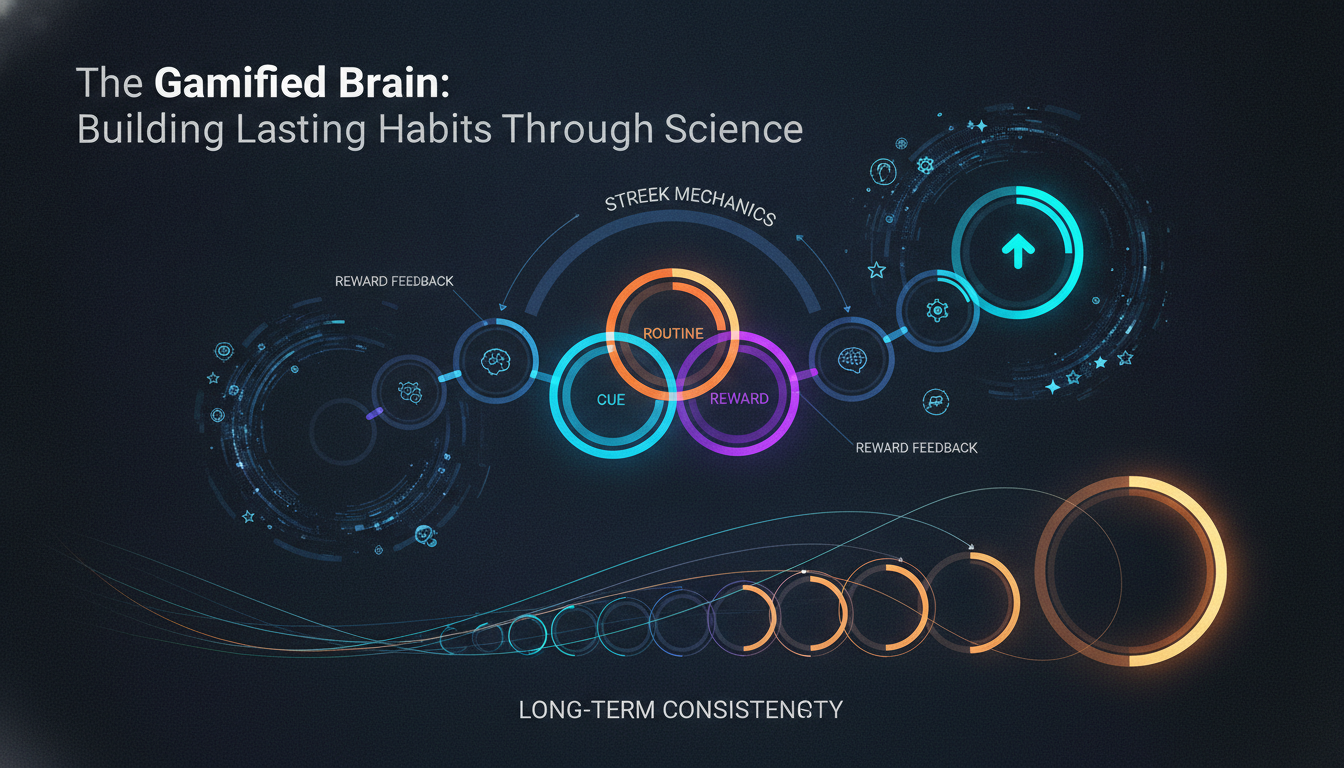
It leans on variable reward and progress feedback — the same loops that make games hard to put down. Visible streaks create loss aversion, and levelling up gives a sense of momentum that pure discipline rarely sustains.
Do the rewards have to be real to work?
No. The reward can be entirely in-app — points, a streak, a level — because the brain responds to the sense of progress itself, not to a physical prize.