Why Big Tasks Feel Impossible — The Psychology of Task Chunking
You have a task on your list called “Launch the website.” It has sat there for three weeks. You know it matters. You know roughly what it involves. And yet every time you look at it, your brain quietly changes the subject.
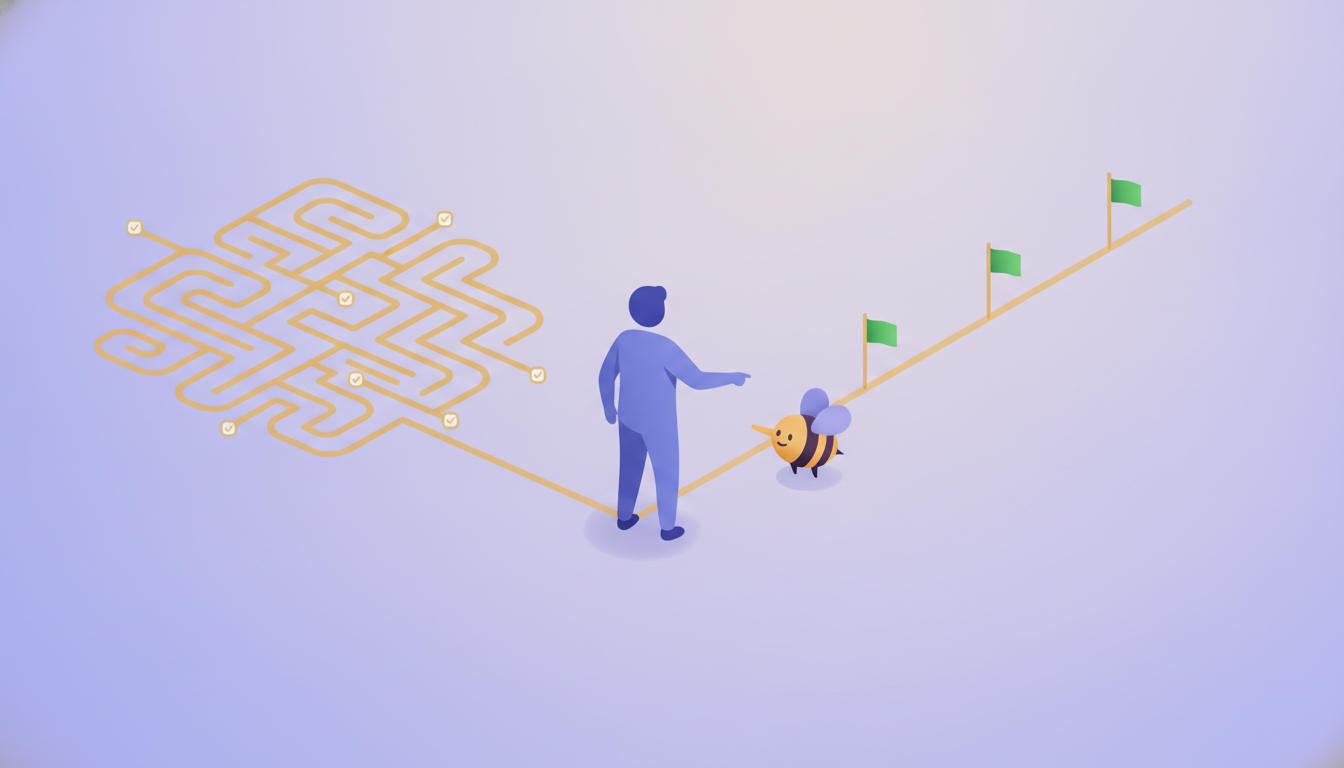
The task is not too hard. It is too big — and bigness is processed by the brain as vagueness. “Launch the website” could mean anything: buy a domain, write five pages, configure hosting, fix the mobile menu, hit publish. Because no single next action is visible, the brain treats the whole thing as one enormous, unstartable blob. So you avoid it, feel guilty, and avoid it harder.
This is not laziness. It is a cognitive phenomenon called task chunking failure, and it is one of the most common reasons capable people under-deliver. The good news: the fix is well understood, and modern AI task managers can automate most of it.
In this article, we’ll explain why big tasks feel impossible, what the science says about chunking, and how to break any project into subtasks you will actually start — including how BeeDone’s AI Task Splitter does the splitting for you.
Why Big Tasks Feel Impossible
Task chunking is the process of breaking a larger goal into smaller, manageable pieces. It sounds trivial. It is not — and the reason is that your brain does not perceive task size the way a spreadsheet does.
The Abstractness Problem
In 1989, psychologists Robin Vallacher and Daniel Wegner published the Action Identification Theory, which showed that any action can be described at multiple levels of abstraction. “Launch the website” is a high-level, abstract description. “Type the first sentence of the About page” is a low-level, concrete one.
Here is the key finding: the more abstractly you identify a task, the harder it is to start it. Abstract tasks require working memory to translate into steps, and working memory is a scarce resource — especially under stress, fatigue, or ADHD. When you see “Launch the website,” your brain has to do the translation work of figuring out what step one even is. That work is friction. Friction becomes avoidance.
Concrete tasks, by contrast, come pre-translated. “Type the first sentence” requires zero planning. You can start it immediately, and starting is what breaks procrastination.
The Cognitive Load of a Blob
Cognitive load theory, developed by John Sweller in the 1980s, adds a second layer. Working memory can hold roughly four chunks of information at once. A big, unbroken task can silently occupy more than that: the goal itself, the fear of failure, the memory of past failed attempts, the unclear first step, and the dozens of hidden sub-questions (“what about the logo? the legal page? the SSL certificate?”).
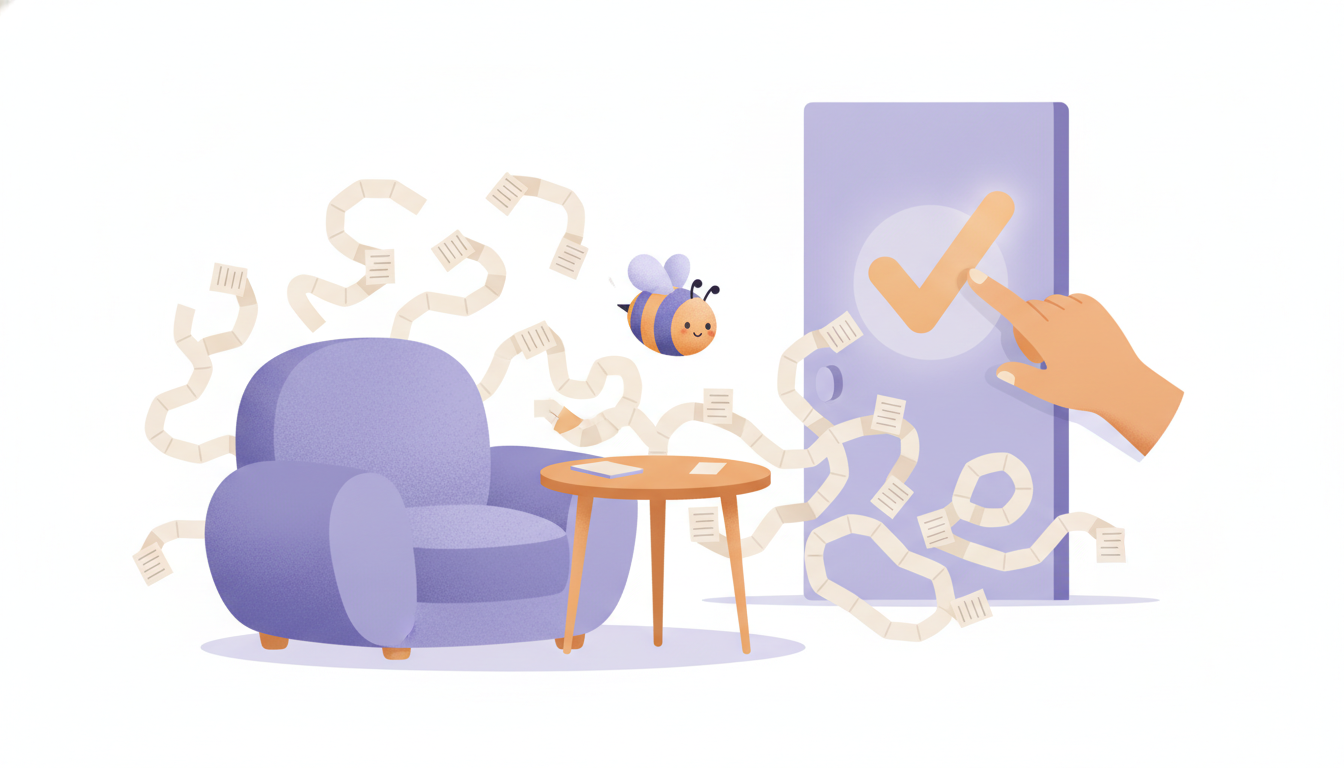
When a task exceeds working memory, the brain does not expand — it avoids. This is why overwhelm is not an emotional weakness; it is a cognitive overflow, and the standard engineering fix for overflow is exactly what you would expect: break the load into chunks that fit.
Why It’s Worse for ADHD Brains
For people with ADHD, the effect is amplified. Research on executive function consistently shows that ADHD affects task initiation — the ability to convert intention into action — more than task execution. A 2020 meta-analysis in Clinical Psychology Review found that adults with ADHD report significantly more difficulty with initiation and planning than neurotypical adults, independent of intelligence.
In practice, that means an ADHD brain needs the first step to be very small and very concrete. “Launch the website” will never start. “Open the domain registrar and search three names” might.
The Science of Task Chunking That Actually Works
Chunking is not just “make a to-do list.” The research points to specific properties that make subtasks startable.
1. Subtasks Must Be Concrete, Not Just Smaller
A common mistake is splitting “Launch the website” into “Work on the website” — smaller in scope, equally vague in action. Effective chunking produces subtasks with a visible endpoint: “Write the About page headline,” not “Work on the About page.” Visible endpoints give the brain closure, which triggers the Zeigarnik effect in your favor: the mind releases unfinished tasks from its active buffer once they are done, and each completion frees attention for the next chunk.
2. The First Subtask Should Be Almost Embarrassingly Small
Behavioral research on task initiation consistently finds that the barrier to starting is highest at minute zero. Making the first subtask trivially small — five to ten minutes of work — bypasses that barrier. Once motion starts, the brain’s inertia flips from resisting to continuing. This is the mechanism behind the famous “two-minute rule” popularized by David Allen: if a task takes under two minutes, do it immediately, because the cost of deferring exceeds the cost of doing.
3. Group Related Subtasks Into Sessions
Cognitive scientists use “chunking” in a second, related sense: grouping related pieces of information so they consume fewer memory slots. Applied to tasks, this means batching. Ten small website tasks feel like one coherent “website session” when grouped, which reduces the number of decisions your brain must make about context-switching.
4. Order Subtasks by Momentum, Not Just Priority
Priority matters, but for big tasks, sequence that builds momentum matters more. If the highest-priority subtask is also the most intimidating (“set up payment processing”), starting with a two-minute win first (“write the thank-you page”) can fuel the run-up to the hard one. Eat-the-Frog purists disagree — and they are right when your energy peaks in the morning. The honest answer is: know your energy curve, and use the chunking structure to make either strategy possible.
How AI Task Splitting Changes the Game
Everything above describes what should happen. The problem is that doing it manually is itself a task — and often a procrastination-friendly one. Research participants who plan instead of act feel productive while producing nothing (see our piece on the planning trap). Splitting a big task by hand can take ten minutes of mental effort at exactly the moment you have no mental effort to spare.
This is where AI task management apps add real value: they do the translation work your working memory was supposed to do.
What an AI Task Splitter Does
An AI task splitter takes a vague, high-level task and generates concrete subtasks with visible endpoints. In BeeDone, for example, you can enter “Prepare the presentation” and the AI Task Splitter returns something like:
- Make the outline
- Create the slides
- Practice out loud
Each subtask is concrete, sequential, and startable. The abstract blob is gone; what remains is a small list of actions, any one of which you could begin within a minute.
Why does this matter psychologically? Because the splitter offloads the cognitive translation work — the exact friction that causes avoidance. Your brain no longer has to figure out step one; it has been handed step one. For ADHD users, this is the difference between a task list that taunts them and a task list that walks them forward.
Splitting That Feels Good: The Rewards Angle
Chunking also multiplies the reward frequency, which is the psychological engine of consistency. Every completed subtask is a legitimate win. Gamified productivity apps exploit this deliberately: each subtask completion produces progress feedback — XP, a visual check, a streak tick — which keeps the dopamine loop firing on a schedule your brain can actually sustain.
BeeDone’s “Big Wins” and reward system are built on this principle: small achievements lead to epic goals. A big task split into eight subtasks generates eight moments of completion instead of one distant finish line — and for habit formation, frequent small rewards beat rare large ones (see why gamification makes habits stick).
How to Chunk Any Big Task (Step by Step)
Whether you use an AI splitter or do it by hand, the same rules apply.
Step 1: Write the Task as a Verb-Object
“Website launch” is a noun, a category, a ghost. “Launch the website” is better, but still abstract. Write it as a verb plus an object: “Publish the website,” “Ship the report,” “Record the course intro.” Verbs force your brain into action mode.
Step 2: Ask “What Does Done Look Like?”
Define the endpoint before the steps. If you cannot describe the finished state in one sentence, the task is still too abstract. “The website is live at a working URL” is a testable endpoint. “The website is good” is not.
Step 3: Generate 3 to 8 Concrete Subtasks
Too few and you’re back to blobs; too many and you’ve built a new overwhelming list. Aim for three to eight subtasks per level. If any subtask still makes you hesitate, split that one again — recursively, until every item is a “within five minutes” action.
Step 4: Put the Smallest Subtask First
Order the list for momentum, not just priority. Your first subtask should be the one you could start with zero preparation. In BeeDone, the AI Task Splitter generates this order automatically; you can also let the Smart Organizer reorder your day by Eat-the-Frog (hardest first) or Slasher (grouped by theme) mode.
Step 5: Start the First Subtask Immediately
Do not schedule the first chunk for later. The whole point of chunking is that the first step is small enough to do now. If you have five minutes, do the first subtask. Momentum is the deliverable.
The Bottom Line
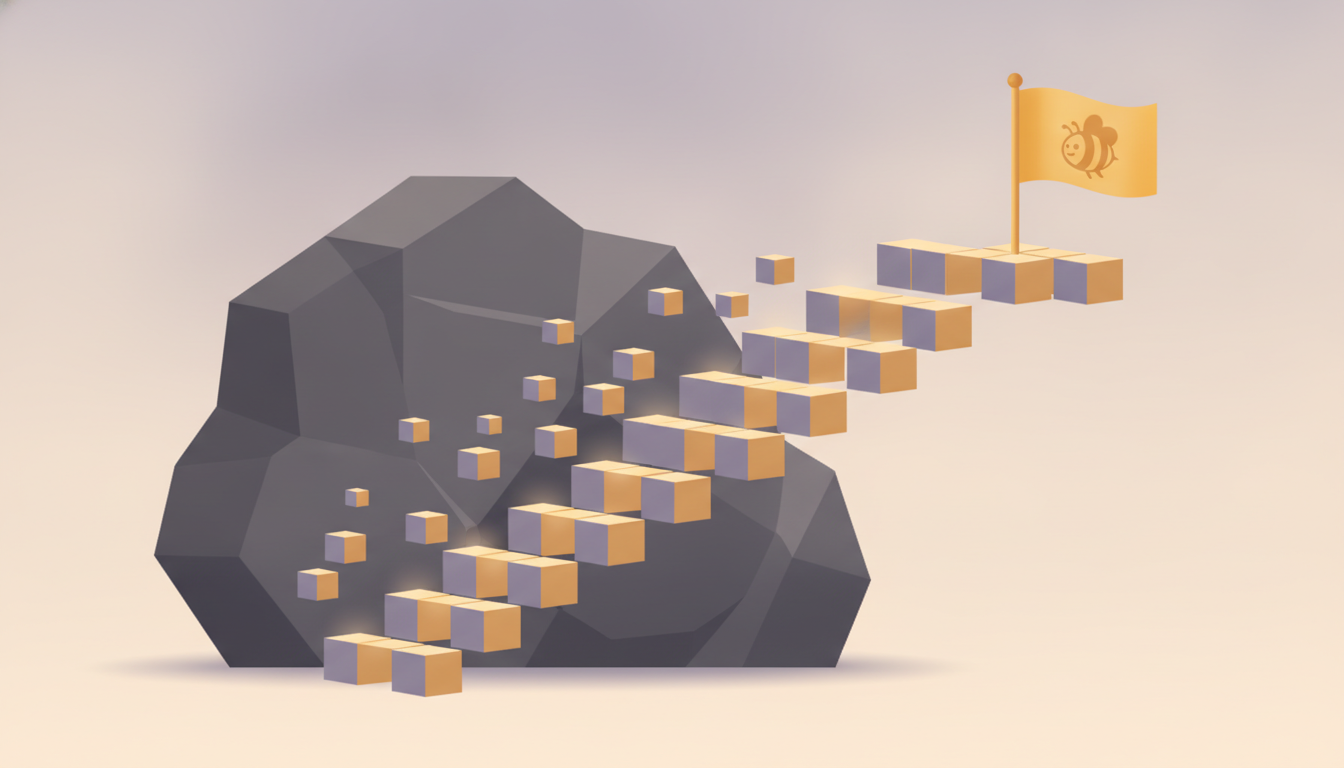
Big tasks feel impossible because they are processed as abstract, cognitively heavy blobs — not because they are truly impossible. Task chunking — breaking a goal into concrete, visible-endpoint subtasks — is the scientifically supported fix, and its power comes from reducing cognitive load and multiplying reward frequency.
You can chunk by hand, but the mental effort of splitting is itself a barrier at the exact moment you’re most likely to procrastinate. That is where an AI task splitter earns its place: it hands you step one so your brain never has to find it.
Try it with BeeDone — free on iOS, Android, and Web. Enter one task that has been sitting on your list for weeks, let the AI split it, and start the first subtask today.