Why You Build Habit Systems Instead of Following Them — And What Actually Works
You have tried everything. Habit trackers, bullet journals, Notion dashboards, habit-stacking spreadsheets, accountability apps. Each time, the same pattern emerges. You spend the first week designing the perfect system. You feel excited, optimistic, in control. Then the second week, you adjust the system. The third week, you stop opening it. The fourth week, you start designing a new system.
If this cycle sounds familiar, you are not broken. You have fallen into the system-building trap, and understanding why you keep doing it is the first step toward real change.
System Building as Avoidance
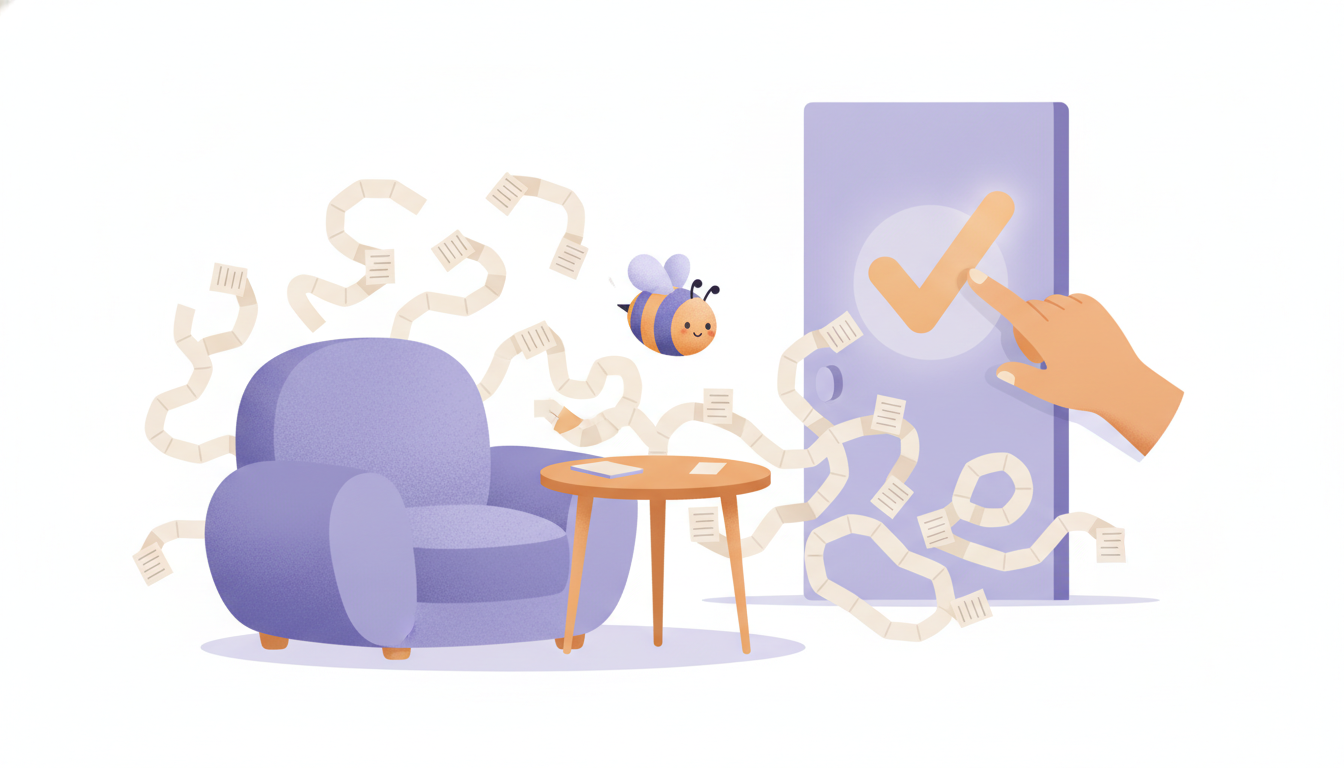
Designing a habit system feels productive because you are engaging with the material of self-improvement. You are reading about habits, thinking about your routines, planning your ideal future self. But the activity you are doing — system design — is not the behavior you want to change.
This is a classic form of productive procrastination. The brain loves the feeling of a fresh start. A new notebook, a new app, a new method. It promises transformation without the discomfort of actual change. The system is the dream. The habit is the work.
For many people, the cycle repeats because each abandoned system confirms a hidden belief: “I am someone who cannot stick with things.” That belief then triggers the search for the perfect system that will finally fix the problem — perpetuating the very pattern it aims to break.
The Science of What Actually Builds Habits
Two research-backed concepts explain why most habit systems fail and what actually works.
Identity-Based Habits
James Clear’s work on identity-based habits, drawn from decades of behavioral science, argues that the most sustainable behavior change happens when you shift your identity rather than your outcomes. Instead of saying “I want to run three times a week,” you say “I am a runner.” The behavior follows the identity, not the other way around.
System building falls short because it focuses on external structures — trackers, reminders, rewards — without addressing the underlying identity. A beautiful tracker does not make you someone who exercises. It makes you someone who owns a nice tracker.
Implementation Intentions
Implementation intentions are specific if-then plans: “If it is 7 AM on a weekday, then I will put on my running shoes and step outside.” Research by Gollwitzer and others shows that implementation intentions dramatically increase follow-through because they offload the decision to a pre-set cue.
Most habit systems fail because they leave the decision point open. “I will exercise today” is vague. The brain has to decide when, where, and how every single time. That decision friction kills consistency. An implementation intention removes the friction entirely.
How BeeDone Bridges the Gap Between System and Action
BeeDone was designed not as another system to configure, but as a system that configures itself around you and gets out of your way.
Atomic Habits Mode
BeeDone’s atomic habits mode is built on the principle that a habit should take less than two minutes to start. Instead of tracking “meditate for 20 minutes,” you track “sit on the cushion.” Instead of “write 500 words,” you track “open the document.”
This approach eliminates the activation energy that kills most habits. The system handles the tracking silently. You just perform the tiny version and let momentum carry you forward. The habit is already done before your brain can talk you out of it.
Mini-Games for Micro-Commitments
BeeDone uses mini-games for moments when full system engagement feels overwhelming. Need to pick a task? The roulette wheel selects one for you. Need a quick win? The rapid-fire habit mode lets you knock out three micro-habits in sixty seconds.
These mini-games are not distractions. They are deliberate design choices that lower the barrier to entry. When the system is too heavy to engage with, the game offers a lighter on-ramp. You start playing, and before you notice, you are working.
Dopamine Modes That Match Your State
Not all moments call for the same motivational strategy. BeeDone’s dopamine modes adapt to your current state. Low energy? The recovery mode adjusts expectations. Scattered? The deep focus mode narrows the field. Need a boost? The challenge mode turns your task list into a game board with bonus XP for rapid completion.
This flexibility acknowledges a truth that rigid habit systems ignore: your capacity and motivation vary day to day. A system that asks the same thing from you every day is a system designed to fail on hard days.
No Configuration Needed
The most important design decision in BeeDone is that you do not configure it. There are no categories to set up, no hierarchies to define, no dashboards to design. You add a task. You start a Focus session. You track a habit. The gamification, the AI coach, the scheduling — all happen automatically.
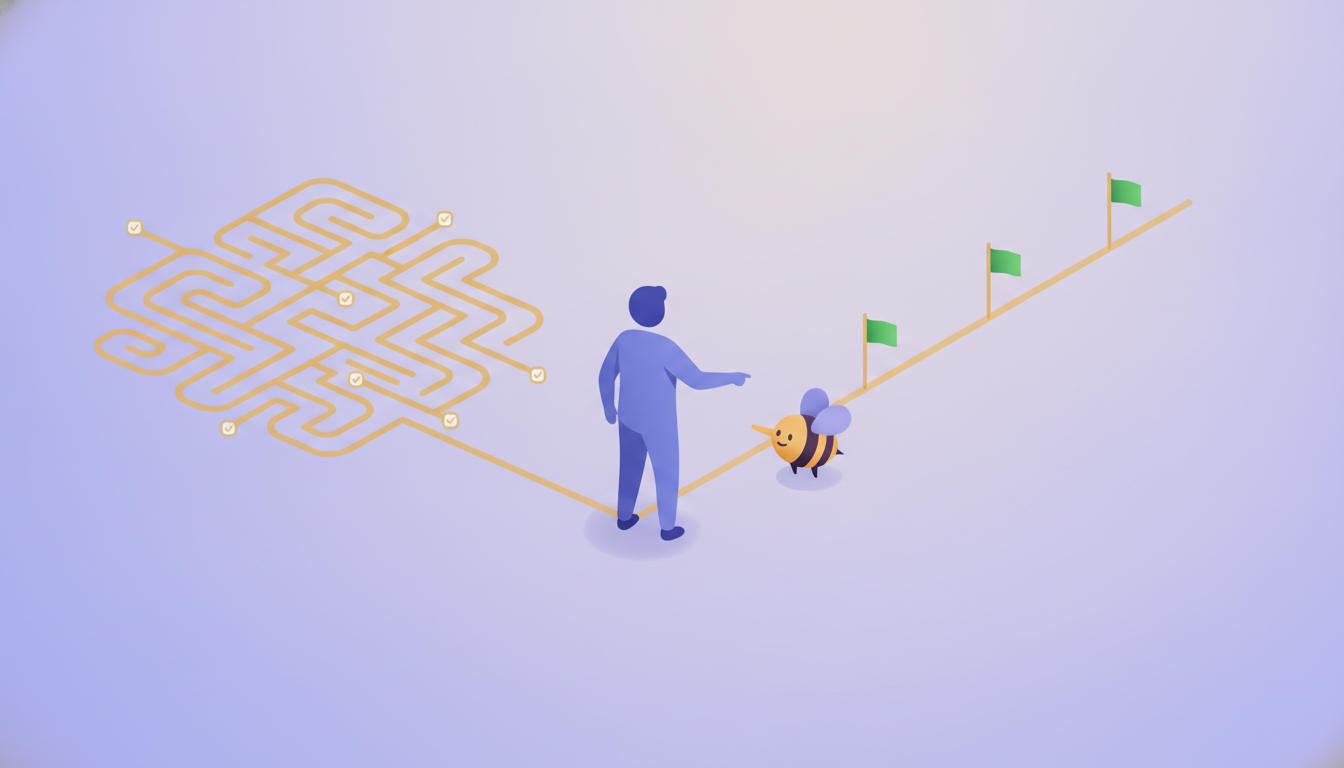
This removes the system-building loop entirely. There is nothing to tweak. The only thing left to do is the work.
The Real Measure of a Habit System
A habit system is not good because it is comprehensive. It is good because it makes the next repetition easier than the last one. If you spend more time designing than doing, the system has failed. The best system is the one you forget you are using because you are too busy living your habits.
Frequently Asked Questions
Why do I keep building new habit systems and abandoning them?
Because system building provides the dopamine of a fresh start without the discomfort of actual behavior change. Each new system promises to finally fix the problem, but the problem is rarely the system — it is the gap between design and execution. Breaking this cycle means choosing a system you do not need to configure and focusing on the smallest possible version of the habit.
What is the difference between system building and habit-building?
System building is the design phase — choosing tools, organizing categories, setting up tracking. Habit building is the repetition phase — actually performing the behavior consistently over time. Most people spend too much time in the design phase because it feels productive without being uncomfortable.
How does identity-based habit formation work?
Instead of setting outcome goals (“I want to run a 5K”), you adopt an identity (“I am a runner”). Each small action reinforces the identity. A two-minute run says “I am a runner” more powerfully than a five-year plan. BeeDone supports this by focusing on the smallest sustainable action rather than the ideal outcome.
Can mini-games really help with habit formation?
Yes, when they are designed to lower the barrier to entry. Mini-games work because they bypass the part of your brain that hesitates and negotiates. By the time your brain realizes it is doing work, the work is already in progress. The key is that the game must lead to real action, not become another form of system engagement.
How is BeeDone different from other habit trackers?
BeeDone requires no configuration. There are no categories to set up, no dashboards to design, no hierarchies to build. The system adapts to you — through AI suggestions, adaptive dopamine modes, and atomic habits support. You add a task or habit and start. The system handles everything else automatically.