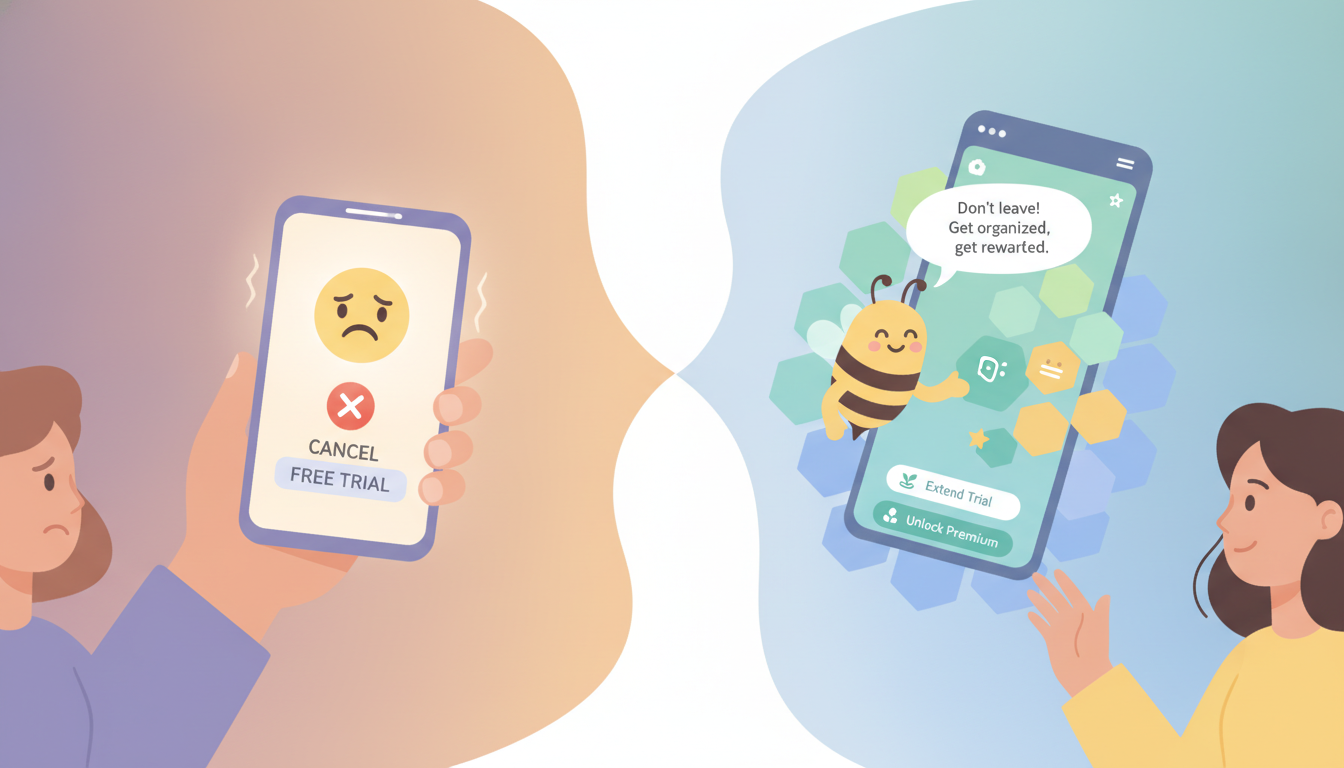
Why You Check Your Streaks More Than You Do Your Tasks — The Psychology of Gamified Productivity
You open your habit tracker. You check the streak. 47 days. Nice. You scroll through the summary. You glance at what’s coming next. Then you close the app. You never actually did the task.
If this sounds familiar, you are not alone. A growing number of people report spending more time reviewing their gamified productivity streaks than doing the actual work those streaks are supposed to track. The app becomes a dopamine slot machine you pull for the satisfaction of seeing the number go up, not a tool that helps you move forward.
This is the dark side of gamification, and understanding it is the first step toward fixing it.
The Streak-Checking Trap
The pattern is insidious. A gamified productivity app promises to make work feel like a game. You earn points, maintain streaks, level up. And at first, it works. The novelty motivates you. The numbers give you a sense of progress.
But over time, something shifts. The streak becomes the goal instead of the work. You find yourself opening the app just to see the streak counter unchanged. You log a trivial action just to keep the streak alive. And then you spend five minutes admiring your stats instead of doing real work.
The streak was supposed to be a measurement of consistency. It becomes a substitute for it.
The problem is compounded when the app design rewards streak maintenance over actual task completion. If a 500-day streak is the most visible metric, your brain learns to protect the streak first. The actual work becomes secondary. And because protecting a streak is easier than doing hard work, you gravitate toward the easy win.
The Dopamine Disconnect
The science behind this is straightforward. When you check a streak and see it is intact, your brain releases a small amount of dopamine. That feels good. It registers as progress, even though no real work happened.
Researchers distinguish between two forms of motivation: extrinsic and intrinsic. Extrinsic motivation comes from external rewards — points, badges, streaks, leaderboard position. Intrinsic motivation comes from the work itself — the satisfaction of solving a problem, building something, or mastering a skill.
Gamified productivity apps lean heavily on extrinsic motivation because it is easy to design for. A streak counter is simple code. But intrinsic motivation is what sustains real effort over the long term. When extrinsic rewards become the primary driver, the work itself feels empty. You stop asking “am I doing meaningful work?” and start asking “did I keep my streak alive?”
This is not a reason to abandon gamification. It is a reason to design it more carefully.
How BeeDone Breaks the Cycle
BeeDone was built with full awareness of this streak-checking trap. The gamification system is designed to keep the dopamine where it belongs — on the work, not the measurement.
Streaks That Work for You, Not Against You
BeeDone’s streak system tracks consistency without letting the streak become the star. Streaks are visible but not highlighted as the primary success metric. The real reward is not a number on a calendar — it is the XP and progression that come from completing tasks, not from maintaining a streak count.
The app recognizes that taking a rest day is sometimes the right call. No guilt-tripping. No “you broke your streak” notification. The streak is a gentle signal of past consistency, not a chain that keeps you tethered to an app instead of your work.
Focus Mode Redirects Attention
When you start a Focus session in BeeDone, the gamification surface partially fades. The emphasis shifts from rewards to the task timer. Your Dopa coach tracks your progress in the background, but the screen prioritizes one thing: the work in front of you.
This design choice acknowledges that gamification is most useful as a warm-up and a cooldown — not the main event. During the work itself, the task should own the screen.
XP on Completion, Not on Login
Many gamified apps reward you just for opening the app. A login streak. A daily visit bonus. BeeDone does not do this. You earn XP when you complete tasks, check off habits, or finish a Focus block. The reward is tied to output, not presence.
This small design difference reshapes your relationship with the app. Opening BeeDone is not the victory. Doing the work is.
Dopa the AI Coach Brings It Back to Purpose
Your AI coach, Dopa, does not celebrate streaks for their own sake. Dopa’s feedback is linked to real progress patterns — “You completed three deep work sessions this week, that’s 40% more than last week” — not “you checked in for 100 days straight.”
This shifts the framing from vanity metrics to meaningful growth.
When Gamification Works
Gamification is not bad. It is powerful. That is exactly why it needs to be handled carefully. When the rewards are tied to real output, when the streak is a servant and not a master, and when the dopamine hit comes from completion rather than checking, gamification becomes a genuine productivity accelerant.
The best gamified system is one you barely notice because you are too busy doing the work.
Frequently Asked Questions
Why do I check my streaks more than I do my tasks?
Because checking a streak is easy and gives immediate dopamine, while doing a task is hard and the reward is delayed. Your brain naturally gravitates to the easy win. When an app makes streak-checking the most visible and satisfying action, it trains you to prioritize the metric over the work.
Is gamification bad for productivity?
Not inherently. Gamification becomes problematic when the rewards are disconnected from real output. Login streaks, daily visit bonuses, and vanity metrics train you to show up but not produce. Effective gamification rewards completion, consistency of real work, and skill development rather than app presence.
How can I stop checking my streaks obsessively?
Start by reducing the visibility of streak metrics. Turn off streak notifications. If your app rewards login streaks, mentally deprioritize them. Shift your focus to completion-based metrics — tasks done, hours focused, habits checked off. BeeDone helps with this by rewarding task completion rather than streak maintenance.
What is the difference between intrinsic and extrinsic motivation?
Extrinsic motivation comes from external rewards — money, points, streaks, praise. Intrinsic motivation comes from within — satisfaction, curiosity, sense of mastery. Gamification works best when extrinsic rewards reinforce intrinsic satisfaction rather than replacing it. The streak should remind you of the progress you have made, not become the goal itself.
Does BeeDone have streaks?
Yes, BeeDone includes streak tracking, but it is designed to stay in the background. The streak is visible as a signal of past consistency, not a primary reward driver. Most of your dopamine and XP come from completing tasks and habits, not from maintaining streaks. The goal is to gamify output, not presence.