Boost Your Focus and Beat Distractions with BeeDone's Smart Features
The average person checks their phone 96 times a day. Each check breaks focus, and research from the University of California Irvine shows it takes an average of 23 minutes to fully regain concentration after an interruption. Do the math, and you realize most people never truly focus at all.
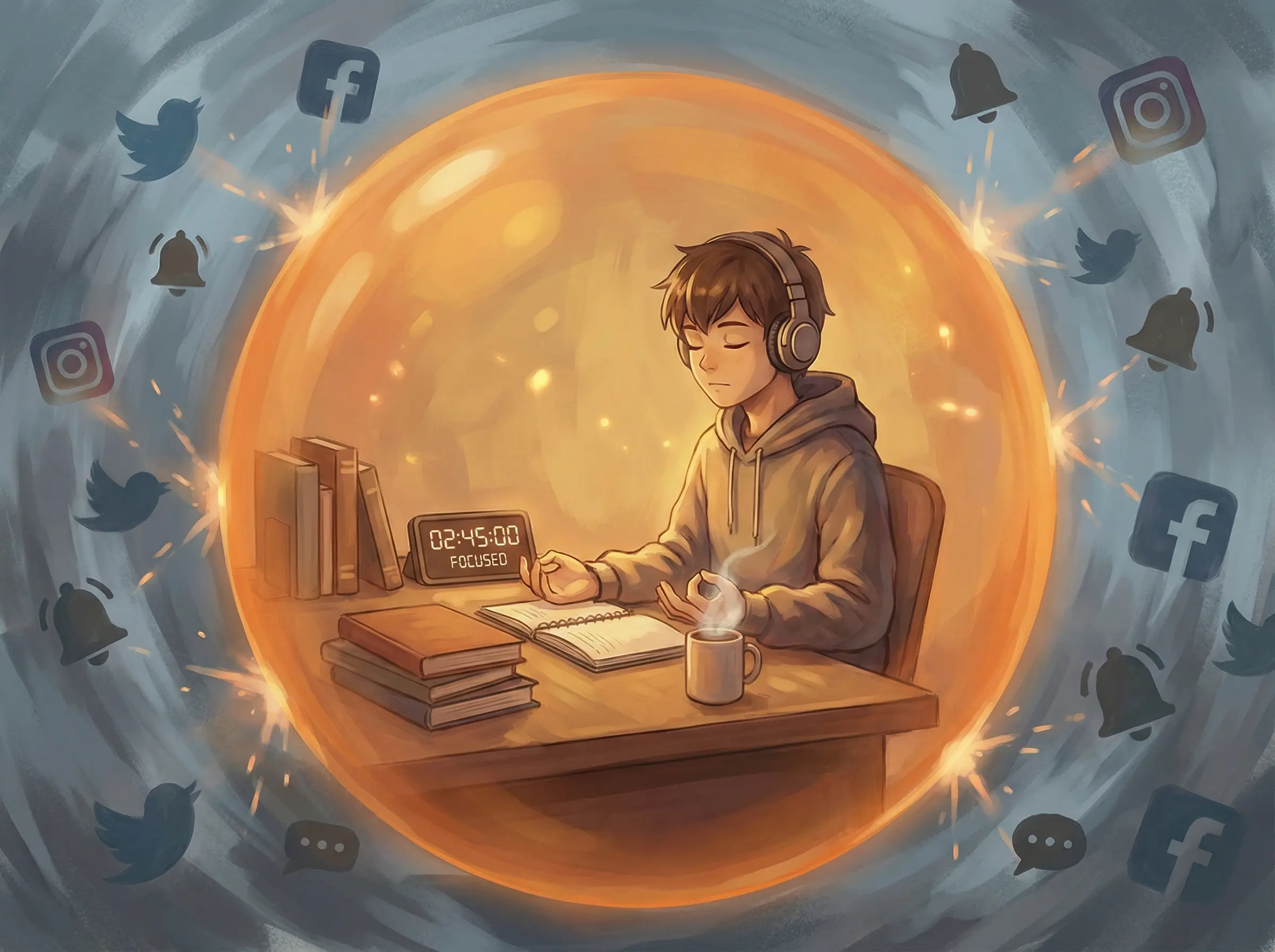
BeeDone was built to fight this reality. Not with willpower (which is finite and unreliable) but with smart features designed to protect your attention, guide you back when you drift, and reward you for staying focused.
Why Willpower Alone Fails
Most focus advice boils down to “just put your phone in another room” or “turn off notifications.” This approach treats focus as a willpower problem. But behavioral science tells us a different story.
Focus is a skill, not a trait. Like any skill, it can be trained, supported, and reinforced. But training requires feedback loops, progressive challenges, and rewards for improvement. That’s what BeeDone’s focus features provide.
The Deep Work Timer: Your Focus Foundation
Cal Newport defines deep work as “professional activities performed in a state of distraction-free concentration that push your cognitive capabilities to their limit.” BeeDone’s Deep Work Timer creates the structure for these sessions.
How It Works
-
Choose your task. Select what you’ll focus on from your organized task list (already prioritized by Smart Sort or arranged by your preferred Smart Organizer mode).
-
Set your duration. Options range from short 15-minute sprints to 90-minute deep sessions. If you’re new to focused work, start short. BeeDone doesn’t judge. Building focus capacity takes time.
-
Start the timer. Once active, the timer creates a psychological commitment. You’ve declared this time as sacred. Your AI coach knows you’re in a session and adjusts accordingly.
-
Earn XP for completion. Finishing a deep work session earns XP proportional to the duration. A 90-minute session earns significantly more than a 15-minute sprint, encouraging you to gradually extend your focus capacity.
Why It’s Better Than a Generic Timer
Any phone has a timer app. BeeDone’s Deep Work Timer is different because it’s integrated into your productivity ecosystem:
- Pre-session clarity. You’ve already chosen your task, so there’s no “what should I work on?” delay
- Mid-session support. The Focus Guardian and Focus Check-ins keep you on track (more on these below)
- Post-session reward. XP gain, streak progress, and AI coach feedback create immediate satisfaction
- Progress tracking. Your deep work hours are logged and visible in your Weekly Wins report
Focus Guardian: Your Attention Watchdog
Drifting attention is normal. Even experienced meditators lose focus. The difference between productive people and distracted ones isn’t that they never lose focus. It’s how quickly they notice and recover.
The Focus Guardian acts as your attention recovery system. During deep work sessions, it monitors your activity and sends gentle nudges when it detects you may be drifting.
What Focus Guardian Does
- Timed reminders at intervals you configure (every 10 minutes, 15 minutes, or 20 minutes) that ask if you’re still on task
- Gentle, non-disruptive notifications that pull you back without breaking flow
- Pattern learning that adjusts reminder frequency based on your focus history
The Psychology Behind It
The Focus Guardian applies the concept of “metacognitive awareness,” the ability to notice what your mind is doing. Research shows that simply being asked “Are you focused right now?” significantly improves task performance because it triggers self-monitoring.
Most people drift without realizing it. They open a browser tab “just to check one thing” and 20 minutes later they’re deep in unrelated content. The Focus Guardian catches these moments early, before the drift compounds into a lost hour.
Focus Check-ins: Strategic Attention Anchoring
Inspired by Chris Bailey’s “Hyper Focus” methodology, Focus Check-ins go beyond simple reminders. They ask you brief, strategic questions during work sessions:
- “What are you currently working on?”
- “Is this the most important thing right now?”
- “How’s your energy level?”
These questions serve multiple purposes:
Recommitment. Each check-in is a micro-decision to stay focused. You’re not passively waiting for the timer to ring. You’re actively choosing to continue your deep work.
Priority validation. Sometimes you start working on Task A but drift into Task B without noticing. The check-in question “What are you currently working on?” forces you to compare your current activity against your original intention.
Energy management. Focus isn’t just about time. It’s about energy. A check-in asking about your energy level helps you decide whether to push through or take a strategic break.
How These Features Work Together
During a typical 60-minute deep work session:
0:00 — You select your task and start the Deep Work Timer. Your AI coach confirms your choice and offers brief encouragement.
0:15 — First Focus Guardian nudge: “Still working on the quarterly report?” You confirm and refocus.
0:30 — Focus Check-in: “What’s the most important section to finish right now?” You answer mentally and narrow your attention to the executive summary.
0:45 — Second Focus Guardian nudge. You realize you drifted to checking email. You close the tab and return to work.
0:55 — Focus Check-in: “How’s your energy? Need a break after this session?” You decide to finish strong and take a 10-minute break afterward.
1:00 — Session complete. +200 XP. Your Deep Work streak advances. Your AI coach acknowledges the effort.
This is structured focus, supported at every step without being intrusive.
Building a Daily Focus Routine
Morning: Set the Stage
BeeDone’s Morning Flow organizes your tasks for the day. If you use Eat-the-Frog mode through the Smart Organizer, your most demanding cognitive task sits at the top. Pair this with a 90-minute deep work session first thing in the morning when your prefrontal cortex is at peak capacity.
Midday: Recover and Recharge
After lunch, cognitive capacity naturally dips. Use shorter 25-minute deep work sessions with more frequent Focus Guardian check-ins. Task Roulette can help select lighter tasks that still move the needle without requiring peak concentration.
Afternoon: Strategic Deep Work
For most people, a second focus peak occurs between 3 PM and 5 PM. Schedule another deep work block here, targeting tasks that require creativity or problem-solving (research shows the afternoon brain is better at creative connections than the morning brain).
Evening: Review
Your Weekly Wins report (available any time, updated weekly) shows your deep work trends: total hours, average session length, time-of-day patterns, and improvement trajectory. This data helps you optimize your focus schedule over time.
Beating Specific Distraction Types
Phone Addiction
The average unlock-check-lock cycle takes only 30 seconds, but the attention cost is 15 to 23 minutes of recovery time. During deep work sessions, BeeDone replaces the phone’s role as a dopamine source. Instead of checking social media for a quick hit, you get XP progress and streak advancement that satisfy the same reward-seeking behavior.
Email Compulsion
BeeDone’s Smart Organizer can batch all email-related tasks into a specific block (Slasher mode). Instead of checking email throughout the day, you process it in one focused session. The Deep Work Timer prevents you from spending more time on email than necessary.
Meeting Recovery
After a meeting, your brain needs time to transition back to focused work. Start with a 15-minute deep work session to rebuild momentum, then extend to longer sessions. BeeDone’s flexible timer durations support this gradual re-engagement.
Social Media Drift
When you catch yourself reaching for social media, tap Task Roulette instead. It gives you a quick, random task to complete, redirecting your reward-seeking behavior toward something productive. The XP you earn from completing that task provides the same dopamine hit you were seeking from social media.
Decision Paralysis
When you can’t decide what to focus on, everything feels equally important (or unimportant), and you end up doing nothing. BeeDone eliminates this through:
- Smart Sort that AI-prioritizes your tasks
- Priority Master that categorizes by urgency and importance
- Task Roulette that picks for you when you can’t decide
Tracking Your Focus Growth
BeeDone doesn’t just help you focus. It shows you how your focus capacity grows over time.
Deep work hours per week tracks your total focused time, showing whether you’re building consistency.
Average session length reveals whether you’re able to sustain longer focus periods over time. Most users start with 20 to 30 minute sessions and gradually work up to 60 to 90 minutes within a few weeks.
Focus session completion rate shows what percentage of started sessions you finish without abandoning. This metric improves as the Focus Guardian and Check-ins help you build the habit of completing what you start.
Time-of-day patterns reveal your natural focus peaks, helping you schedule deep work when your brain is primed for it.
All of this data appears in your Weekly Wins report, delivered by your AI coach with personalized insights and suggestions for improvement.
The Gamification of Focus
Focus is hard because the reward is delayed. You focus for an hour, and the benefit (a completed report, progress on a project) doesn’t feel proportional to the effort. BeeDone shortens this feedback loop:
Immediate XP after every completed session makes focus instantly rewarding.
Deep Work streaks create commitment. After 10 consecutive days of completing at least one deep work session, breaking the streak feels costly.
Achievements like “Focus Master” validate your growing ability. Unlocking it after 10 completed sessions is a tangible milestone that traditional focus tools can’t provide.
Level progression that includes focus metrics means your concentrated work contributes to your overall growth in the app. Focus isn’t siloed. It’s part of your complete productivity journey.
Frequently Asked Questions
How long should a deep work session be? Start with whatever feels manageable, even 15 minutes. Research suggests that peak deep work sessions last 60 to 90 minutes. BeeDone’s Deep Work Timer supports any duration, and you can gradually increase as your focus capacity grows.
What is the Focus Guardian in BeeDone? The Focus Guardian is a feature that sends gentle reminders during your deep work sessions to help you notice when your attention drifts. It monitors your focus and nudges you back on track without breaking your flow.
How do Focus Check-ins work? Focus Check-ins ask brief strategic questions during work sessions (like “Are you still on task?” or “What’s the priority right now?”). Inspired by Chris Bailey’s Hyper Focus methodology, they promote metacognitive awareness and help you maintain intentional focus.
Can BeeDone help with ADHD focus issues? Many users with ADHD report that BeeDone’s combination of short, flexible timer durations, Focus Guardian reminders, gamified rewards, and Task Roulette (for decision paralysis) helps them focus more effectively than traditional tools.
Is the Deep Work Timer just a Pomodoro timer? No. While you can use it for Pomodoro-style 25-minute sessions, the Deep Work Timer is integrated with Focus Guardian monitoring, Focus Check-ins, XP rewards, and your AI coach. It’s a comprehensive focus system, not just a countdown clock.
How does BeeDone track my focus improvement? BeeDone logs your deep work hours, session lengths, completion rates, and time-of-day patterns. Your Weekly Wins report analyzes these metrics and shows your focus growth over time, with personalized suggestions from your AI coach.