Micro-Habits and Mini-Games: How Tiny Wins Rewire Your Brain for Productivity
Micro-Habits and Mini-Games: How Tiny Wins Rewire Your Brain for Productivity
You already know the feeling.
You open your to-do list. There it is: “Finish quarterly report.” Four words. Somewhere between 4 and 40 hours of work. You stare at it. You close the app. You check your phone instead.
It’s not laziness. It’s a neurological traffic jam. Your brain looks at “Finish quarterly report” and correctly identifies it as a complex, ambiguous, high-stakes task that requires sustained executive function. So it does the rational thing: it avoids it.
The solution isn’t more willpower. It’s smaller tasks. And surprisingly, it might also be a 30-second game of Flappy Bee.
The Micro-Habit Framework: Why Small Is Powerful
The micro-habit concept was popularized by BJ Fogg at Stanford’s Behavior Design Lab. The core insight is simple: habits form when behaviors are easy to do, not when they’re important to do. The smaller the behavior, the less friction it creates, and the more likely it is to actually happen.
A micro-habit is the smallest possible version of a desired behavior.
Not “exercise for 30 minutes.” That’s a regular habit. A micro-habit is “put on running shoes.” Not “write a blog post.” It’s “open a blank document and type the title.” Not “clean the kitchen.” It’s “put one dish in the dishwasher.”
The logic is that starting — not finishing — is the bottleneck. Once you’ve started, momentum often carries you further. But you never get to benefit from that momentum if the task is too big to start.
Why your brain resists big tasks
Executive dysfunction — the inability to initiate tasks even when you want to — isn’t a character flaw. It’s a feature of how the prefrontal cortex works. When a task is large, ambiguous, or associated with negative emotions (boredom, anxiety, perfectionism), the brain’s threat-detection system flags it as costly. The result is procrastination that feels involuntary, because it partially is.
Micro-habits bypass this system by making the initial action so small that it doesn’t trigger the threat response. “Open a blank document” isn’t threatening. It costs almost nothing. So you do it. And once the document is open, you’re already in the task environment. The activation energy for the next step (typing a sentence) is lower than it was for the first step.
The compounding effect
Micro-habits don’t just make individual tasks easier. Over time, they compound into something larger.
If your micro-habit is “write one sentence per day,” you might write 15 sentences on a good day (because momentum). Over a month, that’s 150-450 sentences. That’s a chapter. The micro-habit didn’t write the chapter — but it started the process enough times that the chapter got written.
This compounding is why micro-habits are especially effective for people who struggle with consistency. You don’t need to be consistent at doing big things. You need to be consistent at starting small things. The big things happen as a side effect.
The Reward Problem (And Why Most Productivity Systems Fail)
Here’s the issue that most productivity advice ignores: habits need rewards to form.
The habit loop — cue → routine → reward — was identified by researchers at MIT’s Brain and Cognitive Sciences department. Every habit, from brushing your teeth to checking Instagram, follows this pattern. The cue triggers the behavior, and the reward tells your brain “that was worth doing, do it again.”
For naturally rewarding behaviors (eating, socializing, novelty-seeking), the reward is built in. For productivity behaviors (doing tasks, maintaining focus, organizing), the reward is often delayed, abstract, or nonexistent. Finishing a task feels good momentarily, but the reward is weak compared to, say, the dopamine hit of a social media notification.
This is why to-do lists work for a week and then stop working. The cue is there (the list). The routine is there (doing the task). But the reward is barely there. Your brain never gets a strong enough signal to encode the behavior as a habit.
Traditional productivity apps solve for task management. They don’t solve for reward.
Mini-Games as Micro-Rewards: The Missing Piece
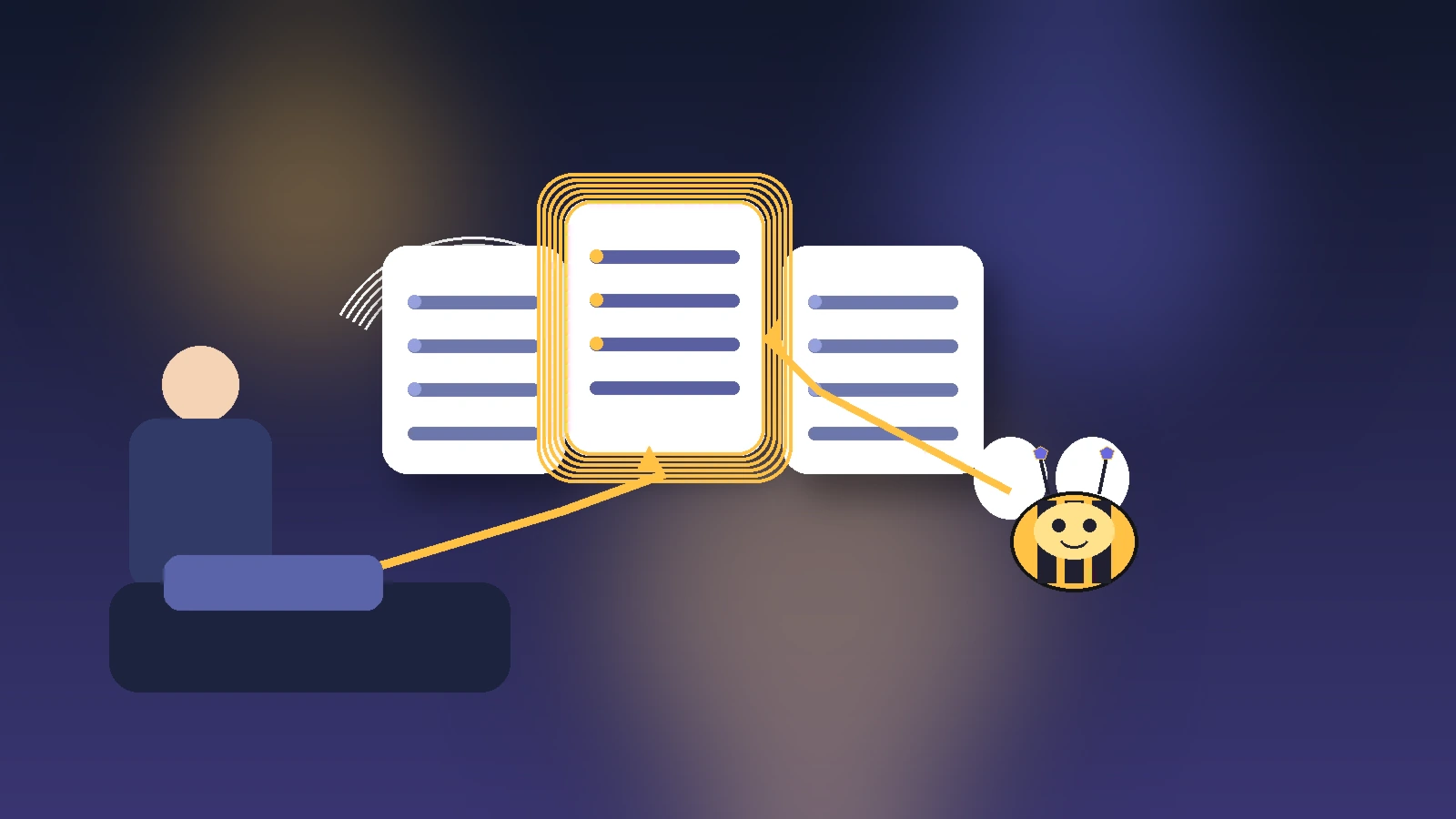
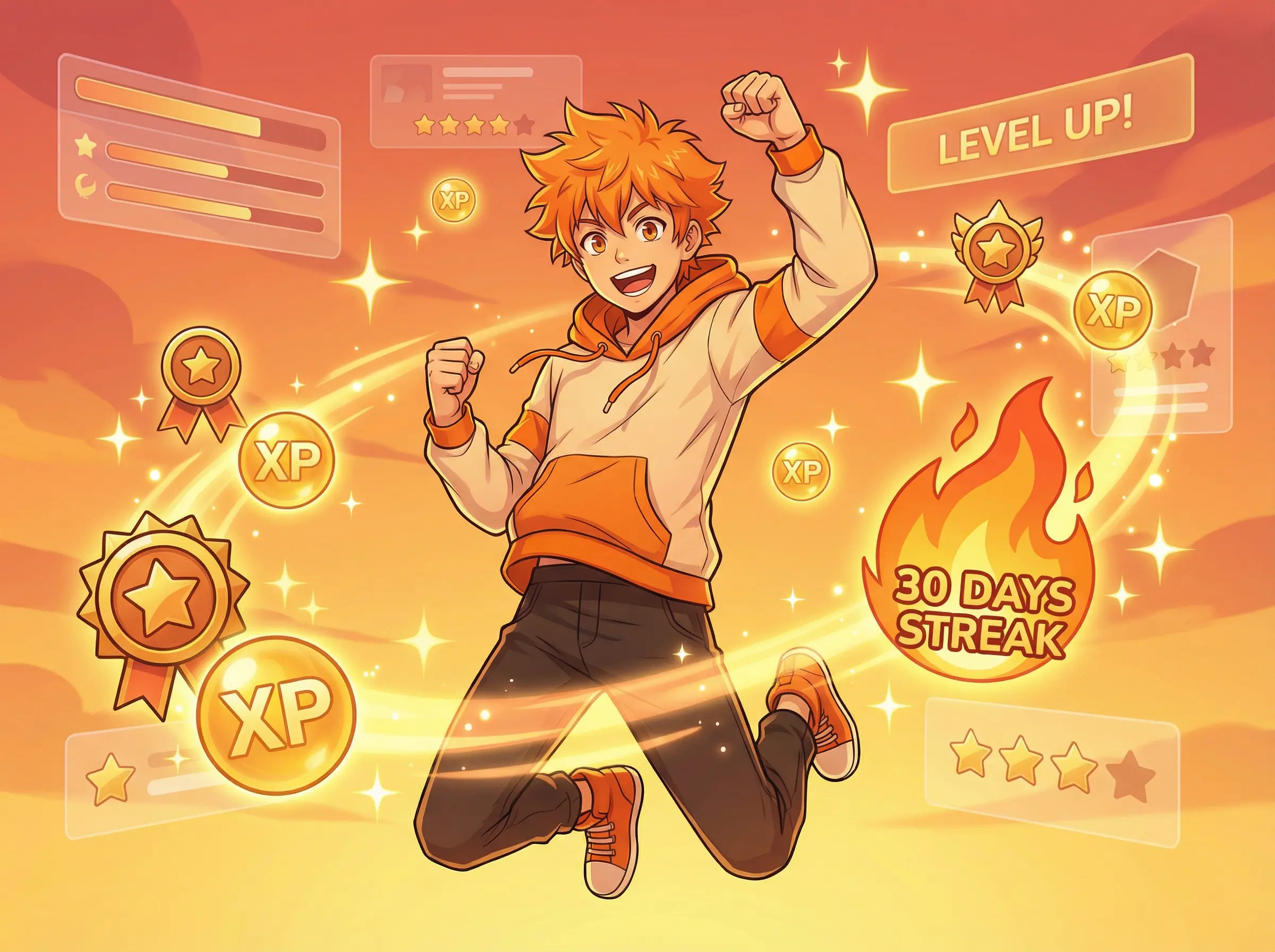
This is where the BeeDone approach gets interesting. The app embeds mini-games — FlappyBee, BeeSnake — as reward mechanisms within the task completion flow. Finish a task, earn XP, play a quick game. The game takes 15-30 seconds. It’s fun. It provides an immediate, tangible reward.
At first glance, this seems gimmicky. Why would playing a game after finishing a task help you be more productive?
Because it solves the reward problem.
Immediate gratification bridges the gap
The core issue with productivity habits is that the reward is too far from the action. You finish a task and feel… mildly relieved. Maybe. The neurological reward signal is weak and delayed.
A mini-game provides an immediate, intense reward. You get points, you beat a score, there’s visual feedback and a small spike of dopamine. Your brain registers: “Something good happened right after I finished that task.”
This temporal proximity matters enormously. The closer the reward is to the action, the stronger the habit encoding. A reward 30 seconds after task completion is neurologically much more powerful than a reward 30 minutes later (or never).
Variable reward schedules
The most addictive reward systems — slot machines, social media feeds, loot boxes in games — use variable reward schedules. You don’t know exactly what you’ll get, but you know it’ll be something good. This uncertainty amplifies the dopamine response.
Mini-games naturally create variable rewards. Your score varies. Sometimes you do great, sometimes you crash immediately. This variability makes the reward more engaging than a fixed “task completed ✓” checkmark.
Breaking the monotony
Task execution is, by nature, somewhat monotonous. The same process: read task → do task → check off task → next task. Over time, this monotony reduces engagement, even if the tasks themselves are meaningful.
A 30-second game between tasks breaks the monotony without breaking the workflow. It’s a palate cleanser — a brief shift in cognitive mode that prevents the fatigue that comes from sustained task execution.
Making productivity feel less like work
This is the intangible benefit that’s hard to measure but easy to feel. When your productivity app includes play, the entire experience shifts from “work tool” to “something I somewhat enjoy using.” That shift matters for long-term engagement. People abandon productivity apps because they feel like homework. They don’t abandon games.
Designing Your Micro-Habit + Mini-Game System
If you want to combine micro-habits with mini-game rewards (whether in BeeDone or any system), here’s how to make it work:
Break tasks into 2-minute pieces. If a task takes more than 2 minutes, it’s not a micro-task. Break it down further. “Draft email to client” becomes “Open email draft” → “Write subject line” → “Write first paragraph.”
Link the reward to completion, not time spent. You earn the mini-game by finishing a micro-task, not by working for X minutes. This keeps the reward contingent on output, not just showing up.
Keep games short. If the mini-game takes longer than the micro-task, the system is inverted — you’re gaming with task breaks instead of tasking with game breaks. 15-30 seconds per game is the sweet spot.
Track streaks at the micro level. Don’t track “days I worked on the report.” Track “micro-tasks completed.” A 5-micro-task streak is more motivating and more accurate than “I thought about the report today.”
Let momentum build naturally. Don’t force yourself to do 20 micro-tasks. Start with 3. If momentum carries you to 10, great. If it doesn’t, you still did 3 more than you would have otherwise.
The Research Backs This Up
The effectiveness of micro-habits is well-documented:
- A 2021 study in the Journal of Behavioral Medicine found that micro-habit interventions produced significantly higher adherence rates than standard habit-formation approaches over 12 weeks.
- Research on gamification in task management (Hamari et al., 2023 meta-analysis) showed that immediate, game-based rewards increased task completion rates by 28% compared to checklist-only systems.
- The concept of “small wins” — documented by psychologist Teresa Amabile at Harvard — demonstrates that making progress on meaningful work, even in tiny increments, is the single most important factor in daily motivation and engagement.
The convergence is clear: small tasks reduce the activation barrier. Immediate rewards strengthen the habit loop. Mini-games provide those rewards in a way that’s fast, variable, and genuinely enjoyable.
You don’t need a better to-do list. You need smaller tasks and better rewards.
Frequently Asked Questions
What is a micro-habit?
A habit shrunk to the smallest version that still counts — one push-up, one sentence, one task opened. It’s small enough that starting is nearly frictionless, which is what makes it repeatable.
Why do micro-habits work when big goals don’t?
Big goals rely on sustained motivation; micro-habits only need you to start. Because the barrier to entry is tiny, you show up consistently, and consistency is what compounds into results.
How do mini-games fit into building habits?
They supply the immediate reward that a micro-habit on its own lacks. Pairing a tiny win with a quick, satisfying reward closes the habit loop and makes the behavior worth repeating.