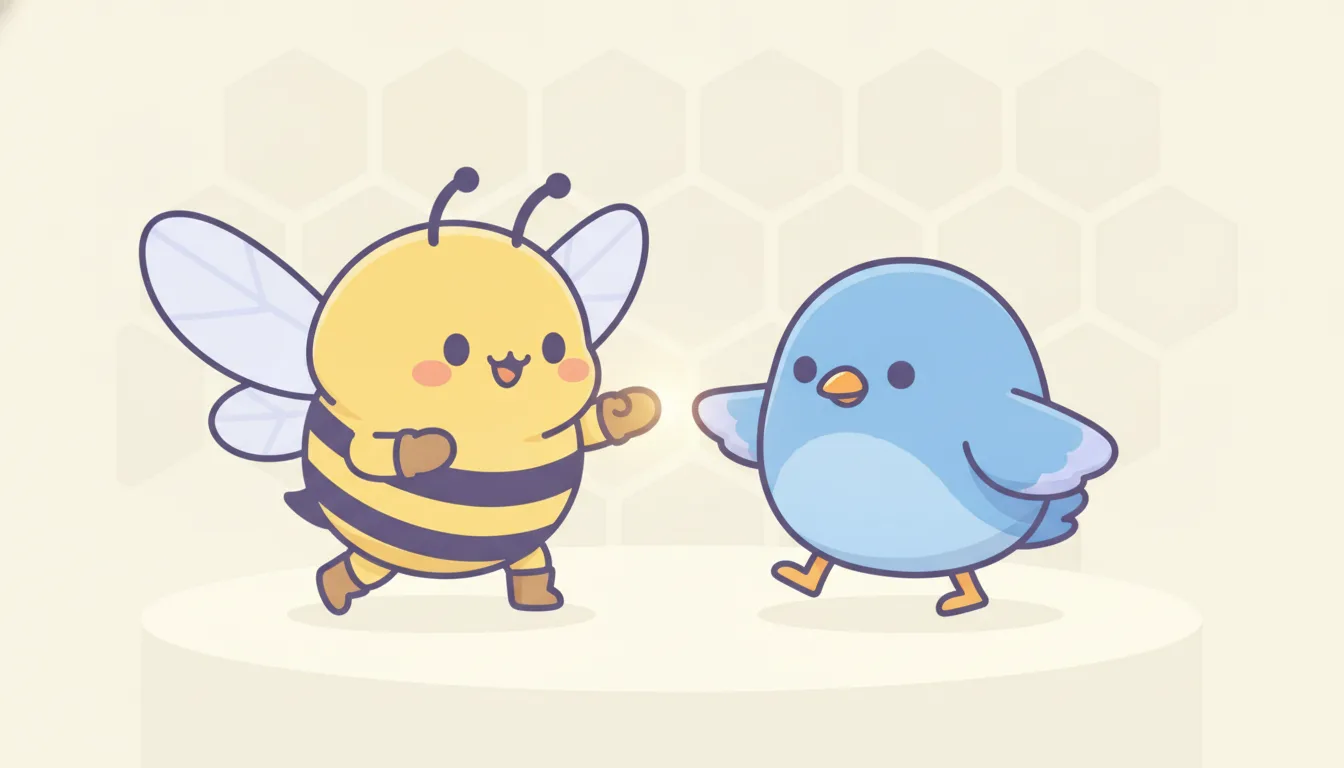
BeeDone vs Finch: Which Gamified Habit App Actually Helps You Stick With It? (2026)
You open Finch every morning. You check in, you send good vibes to your bird, you feel genuinely better — and then you close the app and the report you’ve been avoiding for two weeks is still sitting there, untouched.
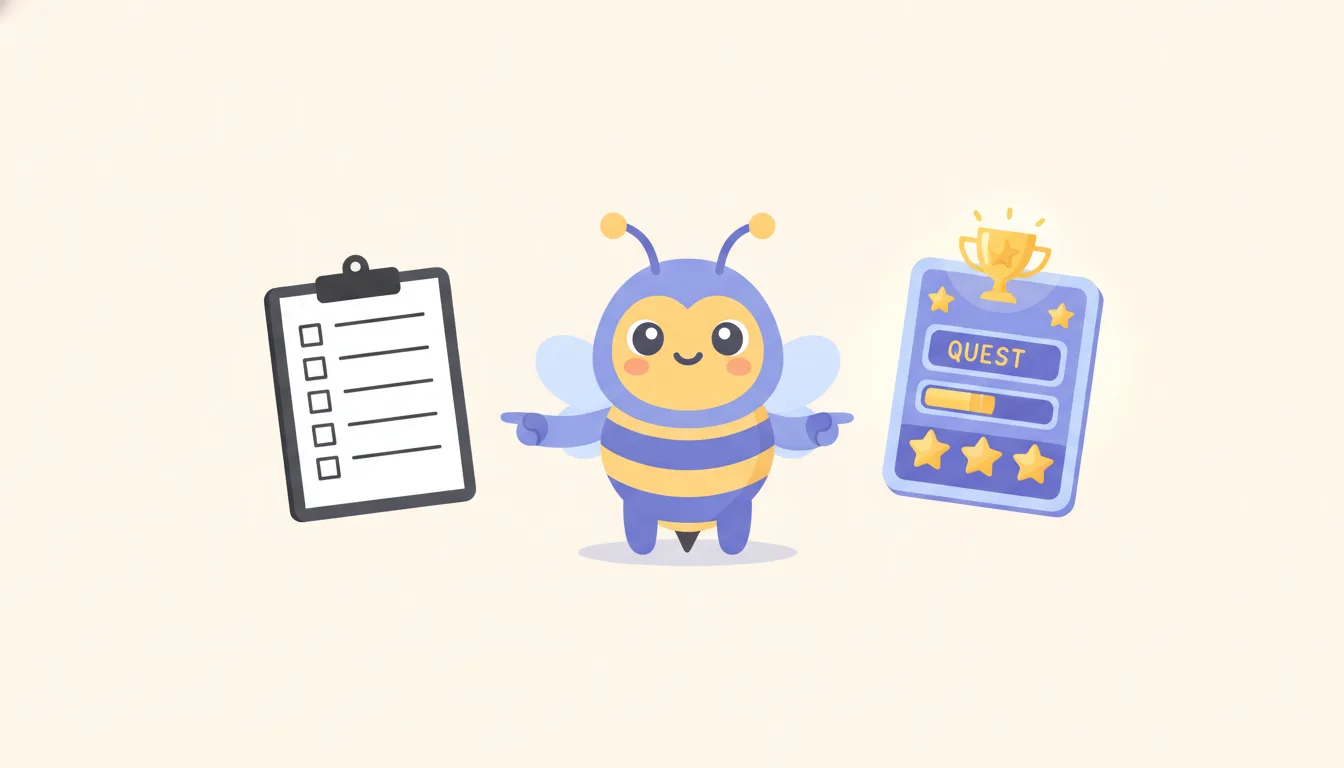
Or maybe you’re on the other side: you’ve tried the serious productivity apps, bounced off every one of them, and you’re wondering if a gentler, cuter app is what your brain actually needs. That’s the real BeeDone vs Finch question. It’s not “which app is better” — it’s “which problem are you actually trying to solve?”
In this 2026 comparison, we’ll look at what each app genuinely does well, where they overlap far less than people assume, and which one to pick depending on what breaks down for you.
The Core Difference in One Paragraph
Finch is a self-care companion. You adopt a tiny virtual bird that grows when you take care of yourself — checking in with your feelings, practicing gratitude, doing breathing exercises, setting gentle goals. The rewards celebrate self-care, and the app is deliberately soft: no pressure, no deadlines, no guilt.
BeeDone is a gamified productivity system. It takes your actual workload — tasks, habits, routines, focus sessions — and wraps it in XP, levels, streaks, AI coaching, and mini-games so that doing the work is what gets rewarded.
Put simply: Finch helps you feel better. BeeDone helps you get things done. One is a warm companion for your emotional state; the other is an execution engine for your day. Plenty of people need both things — but they are not the same thing, and picking the wrong one for your bottleneck is how apps end up abandoned.
What Finch Does Brilliantly
Finch didn’t earn a 4.95-star rating from over 740,000 App Store reviews by accident. Let’s give the bird its due.
The pet is a genuinely powerful motivator. Your finch grows, learns to talk, goes on little adventures, and reacts to how you care for yourself. That emotional bond is real — people open Finch on days they can’t open anything else, because the bird is waiting. As a hook for showing up daily, it’s one of the best ever designed.
It makes self-care concrete. “Take care of yourself” is vague advice. Finch turns it into small, doable acts: a mood check-in, three gratitudes, a breathing exercise, drinking a glass of water. For people in a rough patch, that structure is a lifeline, not a gimmick.
It’s radically pressure-free. No overdue tasks glaring in red, no broken-streak shame, no productivity guilt. Finch was built by Finch Care Public Benefit Corporation with a wellbeing-first mission, and it shows. If you’re burned out precisely because of hustle-flavored apps, Finch feels like an exhale.
The community is unusually kind. Finch’s social features — sending good vibes, tree towns with friends — are gentle and supportive in a way most app communities aren’t. Many users cite friends’ finches as the reason they’ve kept a two-year daily streak.
It’s beloved by the ADHD and mental health community. The low-friction check-ins, the tiny goals, the total absence of punishment — a huge number of Finch’s most devoted users are people for whom traditional trackers felt hostile.
What Finch Doesn’t Do (And Why It Matters)
Here’s the honest part, and it’s not a criticism of Finch — it’s a description of what Finch deliberately chose not to be.
Finch is not a task manager. You can add goals and to-dos, but there’s no real task system: no priorities, no projects, no due-date engine, no way to run your actual workload out of it. Finch’s own design pushes toward gentle self-care goals (“stretch for two minutes”), not “finish the client proposal by Thursday.”
The rewards celebrate self-care, not execution. This is the deepest difference. Your bird thrives when you check in and care for yourself — which is wonderful — but the reward loop is disconnected from your real work. You can have a flourishing finch and a completely stalled to-do list at the same time. Ask around: plenty of long-time users describe exactly this.
There are no structured routines or focus tools. Finch has daily reflections, but not routine systems that chain real habits together, and nothing resembling a focus or deep work timer. When it’s time to actually sit down and concentrate for 50 minutes, Finch has no opinion and no tooling.
There’s no adaptive coaching. Finch offers exercises, but it doesn’t watch your patterns and intervene — nothing notices that you’ve skipped the same habit four days running and suggests restructuring it. The bird reacts to your care; it doesn’t coach your behavior.
Big tasks stay big. If a project feels overwhelming, Finch can help you calm the anxiety around it — genuinely useful — but it won’t break the project into concrete next steps. The wall between you and starting remains exactly as tall as it was.
The Feature Comparison
| Feature | BeeDone | Finch |
|---|---|---|
| Task management | ✅ Full (quests, priorities, due dates) | ⚠️ Gentle goals/to-dos only |
| Habit tracking | ✅ Advanced, flexible frequency | ✅ Self-care focused habits |
| Structured routines (morning, evening) | ✅ Built-in | ⚠️ Daily check-ins, not routine chains |
| AI coaching | ✅ 8 coaches with distinct personalities | ❌ None |
| AI task splitting | ✅ Built-in | ❌ None |
| Deep Work focus timer | ✅ Built-in | ❌ None |
| Gamification of task completion (XP, levels) | ✅ Core architecture | ❌ Rewards self-care, not tasks |
| Streaks with recovery mechanics | ✅ Built-in | ✅ Streaks, deliberately low-pressure |
| Mini-games / contained breaks | ✅ FlappyBee, BeeSnake | ❌ None |
| Self-care & mental health exercises | ⚠️ Not the focus | ✅ Best in class (check-ins, breathing, journaling) |
| Pet / emotional companion | ❌ Bee mascot, not a pet you raise | ✅ The whole heart of the app |
| Community / social features | ❌ Solo-focused | ✅ Good vibes, tree towns, friends |
| Platforms | iOS, Android, Web | iOS, Android |
| Free tier | ✅ Novice plan, no credit card | ✅ Generous free tier |
| Premium | $8/mo Pro Player, $120 lifetime Legend | Freemium with a Finch Plus subscription |
Where Finch Wins (Be Honest)
If your bottleneck is emotional — anxiety, burnout, a rough mental health stretch — pick Finch. It is the best self-care companion app ever made, and BeeDone doesn’t attempt to compete with its check-ins, journaling prompts, breathing exercises, or mindfulness content.
If you need a reason to open any app on your worst days, the bird wins. An emotional bond with a creature that’s happy to see you is a different kind of motivation than XP, and for some people it’s the only kind that works on a bad day.
If you want a kind community, pick Finch. Its social layer is warm and famously supportive. BeeDone is a solo experience by design — there’s no built-in community to lean on.
If you want simplicity, Finch’s gentle daily loop — check in, care for your bird, done — asks almost nothing of you. That’s the point, and it’s executed beautifully.
Where BeeDone Wins
When feeling better isn’t translating into doing better. This is the whole thesis. BeeDone attaches the reward loop directly to execution: every task is a quest that earns XP, levels you up, and feeds your streak. The dopamine arrives when the work gets done — which is exactly the loop Finch leaves unbuilt. (We dug into why this works in gamify your goals: making productivity fun.)
When you need real task management. Priorities, due dates, smart sorting, task roulette for the “I can’t choose” moments — BeeDone runs your actual workload, not a gentle parallel list of self-care intentions.
When big tasks are the wall. BeeDone’s AI Task Splitter breaks an overwhelming project into concrete subtasks with visible endpoints. For chronic avoiders, this is the single highest-leverage feature in the app. (Here’s the psychology of why chunking works.)
When you need a coach, not just a companion. BeeDone ships 8 AI coaches with distinct personalities — supportive, direct, professorial — that notice your patterns and adapt. A companion cheers for you; a coach changes what you do next.
When focus is the missing piece. The built-in Deep Work timer gamifies focus sessions, and the mini-games (FlappyBee, BeeSnake) give your breaks a container so they don’t swallow the afternoon.
For the ADHD execution layer. Finch is beloved by ADHD users for emotional regulation — deservedly. But ADHD has a second front: actually starting and finishing. Immediate XP feedback, forgiving streaks with recovery, task splitting, and adaptive coaching attack that front directly.
Where BeeDone Fits
The honest verdict: choose Finch if your bottleneck is emotional wellbeing. Choose BeeDone if your bottleneck is execution — tasks that sit, habits that die, focus that scatters.
BeeDone fits the person who loves what Finch did for their mornings but has watched their actual to-do list stall for months. It fits the ADHD user who has the self-compassion part handled and now needs the getting-started part. It fits anyone who wants tasks, habits, routines, deep work, and motivation in one gamified system instead of four apps.
And the trade-off, stated plainly: BeeDone is not an emotional companion. There’s no creature that grows because you were kind to yourself, no community sending you good vibes. BeeDone is highly rated on the App Store, but its bee is a game master, not a pet — it hands you quests, XP, and coaching, then gets out of the way. Some people need the bird. Some people need the game. Quite a few Finch users end up running both: Finch for the inner weather, BeeDone for the outer work — the free Novice plan makes that experiment cost nothing to try.
If you’re comparing more traditional tools too, we’ve done the same honest exercise with Todoist and Habitica.
The two apps aren’t really competing for the same moment of your day. Finch optimizes the moment you check in with yourself. BeeDone optimizes the moment you’re supposed to start the thing you’ve been avoiding — and for most people, that’s where the week is actually won or lost.
FAQ
Is Finch better than BeeDone?
For emotional self-care, yes — Finch is the best self-care pet app made, with a 4.95-star rating from over 740,000 reviews. For getting tasks done, no — BeeDone offers full task management, routines, a Deep Work timer, AI task splitting, and 8 AI coaches, none of which Finch has. The right choice depends on whether your bottleneck is wellbeing or execution.
Does Finch have real task management?
No. Finch supports gentle goals and simple to-dos, but it has no priorities, projects, due-date system, or workload management. It’s designed as a self-care companion, not a task manager. BeeDone is built for actual task execution, with XP and levels tied to completing your real work.
Is Finch good for ADHD?
Finch is excellent for the emotional side of ADHD — low-pressure check-ins, no punishment, and a companion that keeps you opening the app. It doesn’t address the execution side: starting tasks, breaking them down, and sustaining focus. BeeDone targets that layer with immediate XP feedback, an AI Task Splitter, forgiving streaks, and a Deep Work timer.
Does BeeDone have a pet like Finch?
No. BeeDone has a bee mascot and a game-like world, but you don’t raise a creature by caring for yourself. Its motivation comes from XP, levels, streaks, AI coaches, and mini-games tied to completing tasks — a game loop rather than an emotional bond.
Is BeeDone free?
Yes. BeeDone has a free Novice plan, a Pro Player plan at $8/month, and a one-time Legend plan at $120 for lifetime access. No credit card is required to start. Finch is also freemium, with a Finch Plus subscription for premium content.
Can I use Finch and BeeDone together?
Yes, and it’s a genuinely good combination. Finch covers emotional check-ins, gratitude, and self-care; BeeDone covers tasks, habits, routines, and focused work. They reward different behaviors, so they complement rather than duplicate each other.
BeeDone is available on iOS and Android. The app includes tasks, habits, routines, deep work, AI coaches, and built-in mini-games in a single gamified productivity system.