ADHD and Habit Formation: Why Gamification Works When Willpower Doesn't
ADHD and Habit Formation: Why Gamification Works When Willpower Doesn’t
Let me describe something you’ve probably experienced.
You read an article about building habits. It says: “Just do it for 21 days straight and it becomes automatic.” You commit. Day 1, Day 2, Day 3 — you’re unstoppable. Day 4, something comes up. Day 5, you forget. Day 6, you remember but the streak is broken so what’s the point.
You try again two weeks later. Same result.
The advice isn’t wrong for neurotypical brains. But for ADHD brains, it’s almost actively harmful — because it tells you that the problem is you. Your consistency. Your discipline. Your willpower.
It’s not. It’s your dopamine system. And once you understand that, everything changes.
The ADHD Brain and Dopamine: The Actual Problem
ADHD isn’t a deficit of attention. It’s a deficit of motivation regulation — specifically, dopamine regulation.
Neurotypical brains release dopamine when they anticipate a future reward. “If I do this boring task today, I’ll feel accomplished later.” That future reward is enough to get started.
ADHD brains don’t work that way. The anticipation of a future reward doesn’t produce enough dopamine to overcome inertia. What does produce dopamine: immediate feedback, novelty, competition, challenge, and urgency.
This is why someone with ADHD can spend 6 hours gaming without effort but can’t spend 20 minutes on a task they know matters. It’s not a moral failure. It’s neurology.
The standard habit advice — consistency, routine, future reward — runs directly against how ADHD brains generate motivation. No wonder it doesn’t work.
Why “Just Be Consistent” Is Bad Advice for ADHD
The most popular habit-building frameworks share a common assumption: that the person will be able to generate motivation from a delayed reward.
“Track your habit for 66 days and it becomes automatic.” (Lally et al., 2010)
Wonderful, except ADHD brains don’t experience the same compounding motivation loop that makes habits feel automatic for neurotypical people. The 66th day feels just as effortful as the first.
“Make your habits easy and obvious.” Good advice in theory. But “easy” doesn’t solve the fundamental issue: there’s no dopamine spike for completing something easy that has no immediate reward.
“Use willpower and get back on track.” This is the most harmful advice for ADHD. Willpower is already a scarce resource for ADHD brains (executive function deficit). Telling someone to “just use more of it” is like telling a person with low iron to “just have more energy.”
The research is actually clear on this: ADHD is associated with significantly greater difficulty forming habits through repetition alone. A 2021 meta-analysis in Psychological Bulletin found that ADHD is characterized by deficits in automatic (habitual) responding — meaning the brain doesn’t shift behavior to autopilot the same way.
If repetition alone doesn’t wire habits, what does?
Gamification: Engineering the Dopamine Hit
Here’s where gamification stops being a novelty and starts being a genuine therapeutic tool.
Gamification works on ADHD brains because it provides exactly what the ADHD dopamine system needs:
Immediate feedback. You complete a task. You get XP. Now. Not “you’ll feel proud later.” You get something tangible, instantly.
Visible progress. Levels, experience bars, streaks. The ADHD brain struggles with abstract future progress (“I’m getting better at this habit”). It thrives on concrete present progress (“I’m at Level 14 and I need 200 more XP to hit Level 15”).
Novelty loops. Variable reward schedules — the same mechanism behind slot machines and social media — are extraordinarily effective for ADHD brains. When you don’t know exactly what reward is coming, dopamine spikes in anticipation. BeeDone uses gem drops and random bonuses for exactly this reason.
Challenge calibration. The task needs to be slightly above your current comfort level to maintain engagement. Too easy = boring = no dopamine. Too hard = overwhelming = shutdown. The sweet spot generates flow. Game systems naturally create this gradient.
Social comparison. Rankings, leaderboards, and seeing others’ progress triggers dopamine in a way that private progress tracking doesn’t. It’s not vanity — it’s neurology.
None of these mechanisms require willpower. They generate intrinsic motivation from the structure of the activity itself. That’s the difference.
The Research Behind Gamification and ADHD
This isn’t just game designer logic. The research is catching up.
A 2022 review in Frontiers in Psychiatry found that gamified interventions for ADHD showed significant improvements in sustained attention, task completion, and motivation compared to non-gamified conditions. The key driver: immediate feedback and reward variability.
A separate study looking at gamified productivity apps in ADHD adults found that habit completion rates were 34% higher in gamified conditions versus traditional checklist conditions — and importantly, the effect held over 6 months. It wasn’t a novelty spike that wore off.
Why? Because the gamified system doesn’t rely on the user to generate motivation. It generates it. The system does the motivational work that the ADHD brain can’t reliably do on its own.
What Gamified Habit Tracking Actually Looks Like
There’s a meaningful difference between “your habit app has a streak” and genuinely gamified habit tracking.
A streak is one mechanic. True gamification is a system of interlocking feedback loops designed to sustain engagement over time.
In BeeDone, this looks like:
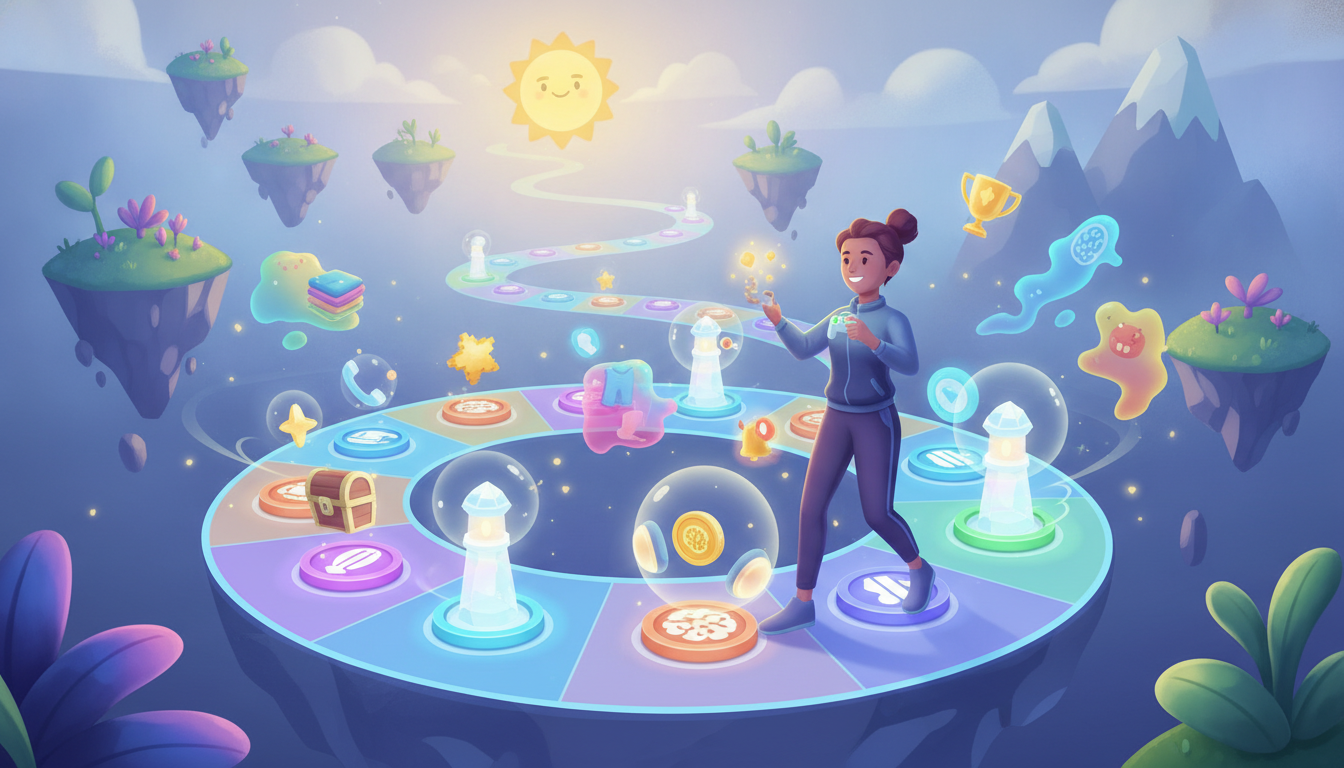
XP and leveling. Every completed task or habit earns XP. As you level up, the game evolves. You’re not doing the same thing forever — you’re growing, and the system reflects it.
Energy mechanics. Your energy depletes as you complete deep work or challenging tasks, and regenerates through rest and lighter activities. This mirrors how actual focus works and teaches ADHD users to manage their real-world energy, not just check boxes.
Gem rewards. Random bonus drops for completing tasks. The variable reward schedule isn’t manipulative — it’s calibrated to how ADHD reward circuitry actually functions.
Mini-games (FlappyBee, BeeSnake). Short, achievable challenges that provide dopamine hits without requiring sustained effort. Used strategically, they can break states of overwhelm without blowing an entire work session.
AI coaching. Eight AI coaches that respond to your actual behavior — not generic reminders. “You’ve completed 3 habits this morning. The afternoon slump is real — want to set a 15-minute protection block?” That kind of contextual feedback is far more effective than “Don’t forget to exercise!”
The key is that every layer of the system is designed to work with the ADHD dopamine system, not against it.
Building Habits That Actually Stick: A Framework for ADHD
Given everything above, here’s what actually works:
1. Start smaller than feels legitimate. The ADHD brain tends toward all-or-nothing thinking. “I’ll exercise every day for an hour.” That fails by week two. Instead: “I’ll do 5 minutes of movement every day.” It sounds embarrassingly small. It has a dramatically higher success rate because it’s completable, which generates the reward loop, which makes it more likely tomorrow.
2. Front-load the reward. Don’t rely on “feeling good later.” Build in immediate rewards. Complete a habit → earn XP → see the level bar move. The reward has to happen now, or the ADHD brain doesn’t register it as motivation for next time.
3. Track streaks but don’t worship them. Streaks are motivating up to a point. But ADHD brains will often self-sabotage a streak the moment they miss once — “well, the streak is broken, might as well quit.” Build in explicit streak saves (BeeDone has this built in). A missed day should never mean starting over.
4. Make the progress visible. Abstract progress doesn’t motivate ADHD brains. “I’m getting healthier” is too vague. “I’ve completed 47 habit entries this month and I’m Level 11” is concrete. Use systems that show you the numbers.
5. Vary the rewards. Doing the same thing for the same reward gets boring fast — especially for ADHD. Build in variety, surprise, and escalating rewards. This is exactly why leveling systems work: the same action (completing a habit) eventually gets you to a new level, which unlocks new things, which sustains engagement.
6. Use external accountability strategically. ADHD brains often activate faster under social observation. Leaderboards, sharing progress with a friend, public commitment — these create urgency in a way private tracking doesn’t.
The Mindset Shift That Changes Everything
The biggest mistake people with ADHD make is treating habit failure as evidence that they’re broken.
They’re not broken. They’re running software that requires different inputs than what most habit systems provide.
Willpower-based habit advice assumes a baseline dopamine system that’s responsive to delayed rewards and intrinsic motivation from repetition alone. That’s not the ADHD baseline.
Gamification-based habit systems assume a dopamine system that responds to immediate feedback, novelty, visible progress, and variable rewards. That’s exactly the ADHD baseline.
Once you stop trying to fix yourself and start using systems designed for how you actually work — habit formation stops being a grinding, guilt-ridden experience and starts being something closer to fun.
That’s not a trick. That’s the correct design.
BeeDone is a gamified productivity app built for ADHD-friendly habit formation. XP, levels, gem rewards, 8 AI coaches, and mini-games designed to make habits stick — not through willpower, but through systems. [Try it free →]
Frequently Asked Questions
Why is forming habits harder with ADHD?
ADHD affects the brain’s dopamine-driven reward system, so the delayed payoff of most habits doesn’t register strongly enough to drive repetition. Gamification supplies an immediate, visible reward, which is why it often works when willpower alone doesn’t.
How long does it take to build a habit if you have ADHD?
The “21 days” figure is a myth. Research puts average habit formation closer to 66 days, and it can take longer for ADHD brains. Consistency matters far more than speed, so streaks and small daily wins that keep the loop alive beat trying to rush it.
Does gamification actually help ADHD or is it just a distraction?
It aligns with how the ADHD reward system works by making progress immediate and concrete. It isn’t a cure, but it converts invisible progress into visible feedback, which is the ingredient most people with ADHD are missing.